
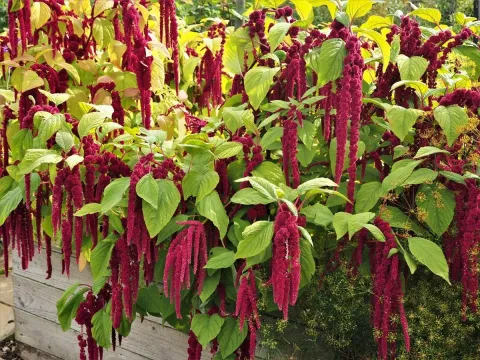
Amaranthus caudatus
Amaranthus caturus
Amaranthus caudatus is a heat-loving crop, which is why sowing should only commence when the soil temperature at a depth of 10 cm reaches at least 12–15 degrees Celsius. The ideal timing in most regions falls in late spring, once the threat of frost has passed.
What the section contains
Amaranthus caudatus
A fine and crumbly soil structure is essential for proper sowing, ensuring optimal seed-to-soil contact. Given that the seeds are extremely small, they must be sown at a shallow depth of 1.5–2 centimeters to allow for efficient germination.
The seeding rate typically ranges from 0.5 to 0.8 kg per hectare for grain production under wide-row spacing. For green fodder purposes, higher planting densities are often employed to maximize biomass production across the field.
Weed management is critical during the initial growth stages, as amaranth develops relatively slowly at the beginning. Pre-emergence harrowing can be a highly effective practice to eliminate early weed competition without damaging the main crop.
In regions with shorter growing seasons, starting the plants in a nursery and transplanting them to the field in the 3–4 true leaf stage is an accepted practice. This strategy helps to ensure a timely harvest before the arrival of autumn cold.
Amaranthus caudatus, commonly known as love-lies-bleeding, is an annual herb belonging to the Amaranthaceae family. Originating in the tropical regions of South America, it is highly valued for its adaptability and nutritional profile.
The crop is known for its remarkable drought tolerance once the root system is established, due to its deep-reaching taproot. While it performs best in fertile, well-drained soils, it can successfully grow in a variety of soil types with neutral pH.
Amaranth is a photophilous plant, meaning it requires ample sunlight for optimal development of its iconic pendulous inflorescences. Shaded areas should be avoided, as they negatively impact both grain filling and the overall biomass yield.
The crop is recognized for its ability to improve soil structure and nutrient availability, often serving as a beneficial component in crop rotation schemes. It is capable of flourishing under moderate management with minimal reliance on chemical fertilizers.
In agricultural practice, Amaranthus caudatus serves dual purposes: as a high-protein fodder crop for livestock and as a source of gluten-free, nutrient-dense grain. Its seeds are exceptionally rich in proteins and essential amino acids like lysine.
Weevils are among the most common pests that can impact amaranth crops, often feeding on seedlings or developing stems. Maintaining field hygiene and timely insecticide application, if necessary, are key to preventing significant damage.
Fungal diseases such as root rot and downy mildew can pose risks, especially under conditions of excessive moisture or poor field drainage. Following correct agronomic practices, such as proper spacing, is essential for disease prevention.
Treating seeds with appropriate fungicides before planting is a recommended practice to protect the emerging plants from soil-borne pathogens. This simple step significantly increases the crop's survival rate and promotes uniform development.
Integrated weed management also plays a role in disease suppression, as many weeds act as reservoirs for various pathogens. Ensuring a clean field environment from the beginning of the season is vital for crop health.
Crop rotation remains the most effective strategy to break the life cycles of pests and soil-borne diseases. Avoiding repeated amaranth cultivation on the same plot for at least three to four years helps maintain soil vitality.
Harvesting amaranth for grain is performed at the stage of physiological maturity, characterized by hard seeds and the distinct coloration of the flower spikes. Prompt harvesting is necessary to minimize losses from seed shattering.
For green fodder, the crop is harvested during the budding to early flowering stage, when the plants contain the highest concentration of protein and minerals. This ensures the best nutritional quality for livestock consumption.
Mechanical harvesting involves the use of combines with settings adjusted for small seeds to minimize physical damage. The use of specialized sieves is highly recommended for efficient separation of grain from plant residues.
Once harvested, the grain must be dried immediately to a moisture content of 12–14 percent to prevent spoilage. Proper storage in dry, well-ventilated conditions is essential to preserve the quality and nutritional value of the grain.
Post-harvest processing often includes aeration and cleaning on aerodynamic separators. This final stage ensures that the marketed product is free from foreign particles and meets the standards for human or animal consumption.