
Amaranthus obcordatus
Amaranthus obcordatus
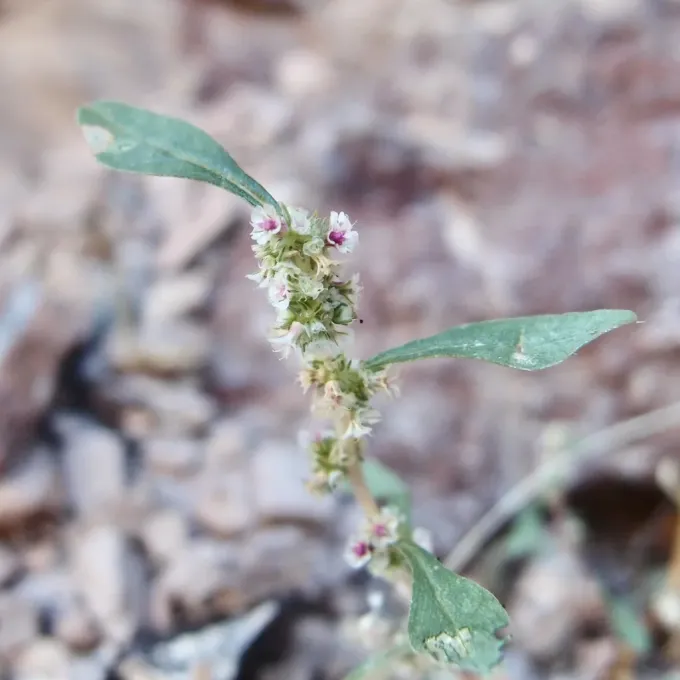
Description
Sowing dates
Amaranthus obcordatus is a vigorous annual herbaceous plant belonging to the Amaranthaceae family. It is known for its prolific seed production, with a single plant capable of shedding thousands of seeds that remain viable in the soil for several years.
Germination typically occurs when soil temperatures reach 12-14 degrees Celsius, though it flourishes during the warmer months of late spring and early summer. The seeds are small and require minimal soil cover to initiate growth.
In agricultural settings, the seeds often germinate in successive flushes following irrigation or rainfall events. This makes pre-emergence cultivation an essential practice for reducing weed pressure in field crops.
Mechanical control involves shallow tillage to expose seedlings to desiccating conditions before they establish a deep taproot. Once the plant reaches the multi-leaf stage, it becomes significantly more difficult to control mechanically.
The plant exhibits rapid initial growth rates, quickly forming a rosette that can shade out emerging crop seedlings if not managed appropriately during the first few weeks of the growing season.
Growing requirements
This species thrives in a wide range of soil conditions, showing a preference for fertile, nitrogen-rich soils. It can tolerate variable soil textures, from sandy loams to heavier clay soils, provided they are well-aerated.
Light is a primary driver of development for Amaranthus obcordatus. As a heliophilic plant, it requires full sun exposure and is highly sensitive to competition for light from taller neighboring crops.
Temperature requirements are high, with optimal metabolic activity occurring between 20 and 30 degrees Celsius. It demonstrates remarkable heat tolerance, often outperforming cool-season crops during mid-summer peaks.
While the plant has a deep taproot that allows it to access subsoil moisture, it responds vigorously to supplemental irrigation. During periods of drought, growth slows down, but the plant remains resilient and capable of rapid recovery after moisture returns.
Soil pH requirements are flexible, allowing the species to persist in various environments, including slightly acidic or alkaline conditions. However, neutral soils generally support the most robust vegetative growth.
Main diseases and pests
Fungal pathogens such as powdery mildew and various leaf spots are the most common diseases affecting this species, particularly in humid, poorly ventilated environments. These diseases can stress the plant and reduce its photosynthetic capacity.
Insect pests, including aphids and various coleopteran larvae, frequently feed on the leaves and stems. While the plant is inherently resilient, significant herbivory can lead to stunted growth and secondary infections.
Root rot pathogens may become problematic in fields with poor drainage or over-irrigation. These diseases can lead to wilting and collapse of the plant, especially in high-density patches where moisture accumulates.
Management strategies often focus on cultural controls, such as implementing diverse crop rotations and maintaining healthy soil microbial populations. Chemical control through herbicide programs remains the standard approach in large-scale farming.
Monitoring is crucial to detect early signs of pest infestation, as the plant acts as a host for several insects that may migrate to nearby commercial crops if the weed population is left unchecked.