
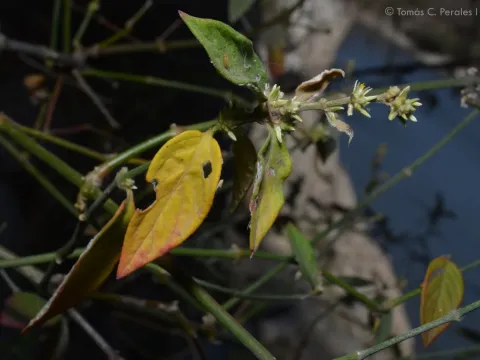
Alternanthera lanceolata
Alternanthera lanceolata
Alternanthera lanceolata belongs to the Amaranthaceae family, known for its diverse and robust tropical species. This plant is a perennial herbaceous crop that displays significant biomass production when cultivated in favorable climate conditions.
What the section contains
Alternanthera lanceolata
Sowing or planting typically commences once the soil temperature consistently reaches optimal levels for germination and early root development. In most agricultural settings, this coincides with late spring or early summer, following the final threat of frost.
Propagation is commonly performed via cuttings, which ensures genetic consistency and faster establishment compared to seed sowing. Cuttings are inserted into well-prepared, loose soil, maintaining uniform spacing to optimize light interception and airflow.
Soil preparation involves deep tilling and organic amendment incorporation, creating an environment that supports deep rooting. Proper field leveling is crucial to prevent the accumulation of water, which can be detrimental to the plant's health.
Post-sowing care focuses on maintaining consistent moisture levels until the roots are fully developed. Once established, the crop demonstrates moderate resilience, but early-stage vigilance is required to prevent water stress or potential root rot.
This crop thrives in conditions of high solar radiation, which is essential for maximizing the accumulation of secondary metabolites and overall biomass. Exposure to full sunlight is recommended to prevent etiolation and maintain structural integrity.
The plant performs best in well-drained, fertile soil with a slightly acidic to neutral pH. Avoiding heavy clay soils that retain excess moisture is critical, as the roots are highly susceptible to hypoxic conditions when waterlogged.
A consistent temperature profile, ideally between 20°C and 30°C, is required for optimal physiological functions. Any significant deviation from this range can lead to slowed growth or physiological dormancy in the crop.
Water requirements should be met through regular, controlled irrigation, especially during periods of rapid vegetative development. In industrial agriculture, subsurface or drip irrigation systems are preferred to reduce evaporation and disease risks.
Balanced fertilization is necessary, with a focus on phosphorus and potassium to encourage robust root systems and stem strength. Excessive nitrogen application should be avoided as it may lead to succulent growth that is more prone to pest attacks.
Fungal pathogens such as Fusarium and Rhizoctonia pose the most significant risk, particularly under high humidity or poor soil drainage. These diseases often attack the root zone, leading to rapid plant decline and failure.
Insect pests, including spider mites and aphids, frequently target the succulent foliage. Their activity is often exacerbated by dry, hot weather, necessitating regular field scouting to detect early signs of infestation.
Integrated Pest Management (IPM) strategies are recommended, combining biological controls with targeted applications of bio-pesticides. Maintaining field hygiene, including the removal of infected plants, is essential to limit the spread of pathogens.
Weed competition is particularly challenging during the first month of growth. Mechanical weeding and the use of mulch are common practices to minimize weed pressure and ensure the crop has access to essential nutrients and water.
Viral infections can also occur, often spread by sucking insects. Implementing a strict vector control program is vital to maintain the health and longevity of the cultivation site over multiple growing seasons.