
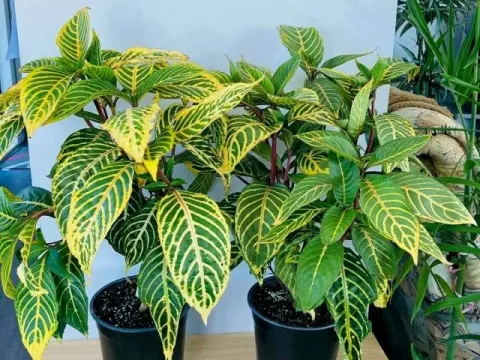
Sanchezia
Sanchezia
Sanchezia is a genus of tropical evergreen shrubs and herbaceous plants belonging to the Acanthaceae family. Native primarily to the rainforests of South and Central America, specifically regions like Peru and Ecuador, this plant is highly prized for its large, attractive foliage marked with striking yellow or white venation.
What the section contains


Sanchezia
Botanically, the plant features square-sectioned stems and opposite leaves. In its natural habitat, it thrives under the canopy, meaning it prefers bright, filtered light rather than direct sunlight, which can scorch its delicate foliage. Proper light management is crucial for maintaining the plant's signature variegation.
Climate requirements for Sanchezia are strictly tropical. It demands temperatures between 18°C and 26°C and cannot tolerate temperatures dropping below 15°C for extended periods. Cold drafts and sudden temperature fluctuations are detrimental to the plant’s overall health and growth cycle.
Soil composition should be rich, well-draining, and moisture-retentive. A mix consisting of peat-based potting soil, organic compost, and perlite or coarse sand provides the necessary structure. A slightly acidic to neutral pH level is ideal for nutrient uptake in a greenhouse or indoor environment.
Agronomic maintenance involves consistent hydration, ensuring the soil remains moist but never waterlogged. Humidity is vital, as the plant originates from high-humidity environments; frequent misting or the use of pebble trays is recommended to prevent leaf tip necrosis.
The primary threats to Sanchezia under intensive cultivation are indoor pests. Spider mites are particularly problematic during winter months when indoor heating lowers relative humidity. They feed on the underside of leaves, causing stippling and eventual leaf loss.
Mealybugs and scale insects also frequently attack Sanchezia. Mealybugs appear as small cotton-like masses, usually clustered in leaf axils, while scale insects form hard, brownish shields on stems. Both pests require prompt intervention with systemic pesticides or horticultural oils.
Root rot represents the most significant fungal risk. This condition is almost exclusively caused by overwatering or inadequate soil drainage. Symptoms include wilting despite moist soil, browning of stems at the base, and a foul odor emanating from the root zone, signaling anaerobic conditions.
Preventive pest management involves regular inspection and ensuring proper air circulation around the plants. Avoiding overcrowding in the greenhouse prevents the rapid spread of infestations and allows for better monitoring of each individual specimen.
Chemical control should be used judiciously, following the manufacturer's guidelines to avoid phytotoxicity. For minor infestations, mechanical removal using cotton swabs dipped in alcohol is often effective and safer for the plant’s foliage.