
Sanchezia speciosa
Sanchezia speciosa
Description
Growing requirements
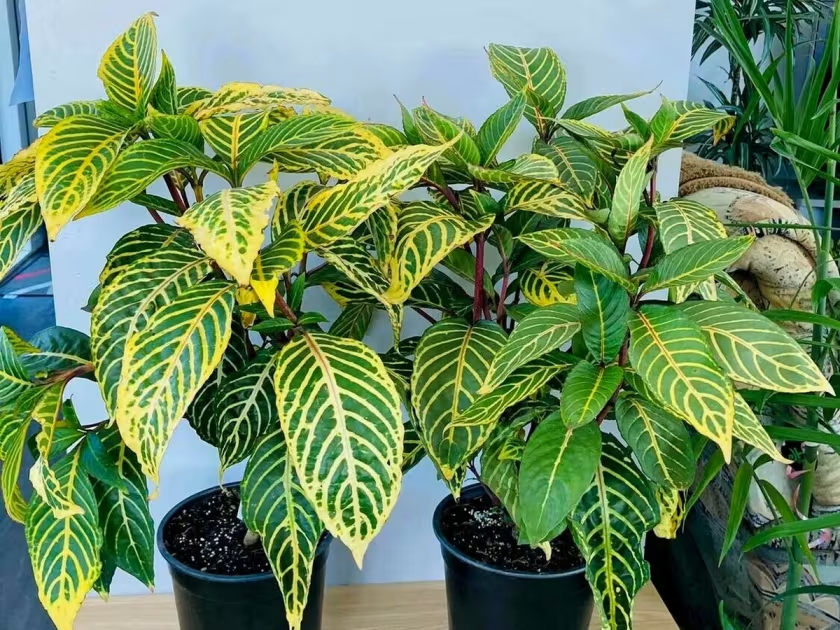
Sanchezia speciosa is a stunning ornamental shrub belonging to the Acanthaceae family. Originally native to the tropical rainforests of Ecuador and Peru, this plant is characterized by its large, glossy leaves featuring striking yellow venation along the veins.
To thrive, this plant requires a consistent tropical environment. It prefers temperatures between 20 and 25 degrees Celsius. It is highly sensitive to cold drafts and temperatures below 15 degrees, which can cause significant physiological stress and lead to rapid leaf drop.
Humidity is a vital component of the plant's growth requirements. In indoor settings, maintaining humidity levels above 60 percent is necessary. This can be achieved through regular misting, the use of pebble trays, or automatic humidification systems to mimic its natural environment.
The soil should be well-draining, rich in organic matter, and slightly acidic. A mix of peat moss, perlite, and high-quality potting soil works best to ensure both moisture retention and proper aeration for the root system. Proper drainage in the pot is non-negotiable to prevent root rot.
Light management is crucial for the aesthetic appeal of Sanchezia speciosa. While it enjoys bright, indirect light, direct harsh sunlight can scorch the delicate foliage. Conversely, insufficient light causes the distinctive yellow veins to fade, turning the leaves entirely green.
Main diseases and pests
Spider mites are the most common pests affecting this species, especially in environments with low air humidity. These microscopic insects feed on sap, leading to yellowing leaves and fine webbing on the plant. Regular monitoring of the leaf undersides is essential for early detection.
Scale insects present another significant threat. These pests appear as small, brownish bumps on stems and veins. Because they are protected by a waxy shell, manual removal combined with appropriate systemic insecticidal treatment is often required to clear an infestation.
Root rot is a major disease caused by overwatering or poor drainage. When the roots remain saturated for too long, they lose the ability to absorb oxygen, leading to necrosis. If signs of rot appear, the plant must be repotted into dry, fresh substrate immediately.
Fungal leaf spot can occur if water remains on the foliage for extended periods in cooler, humid conditions. Ensuring good air circulation around the plant helps keep the foliage dry and minimizes the risk of fungal proliferation.
Mealybugs can cluster in leaf axils and on new growth. Their presence is marked by white, cotton-like masses. Consistent hygiene practices, such as wiping down leaves and checking new growth during regular maintenance, significantly reduce the chances of a widespread outbreak.