
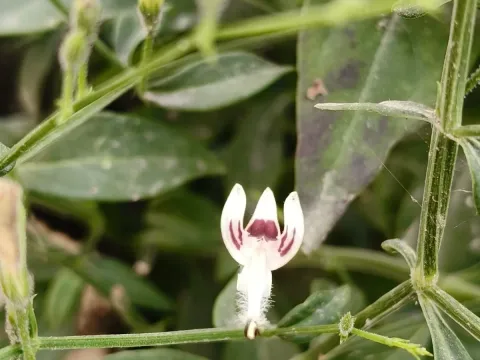
Andrographis paniculata
Andrographis
Andrographis paniculata is a tropical annual plant, making its sowing schedule heavily dependent on regional weather conditions. In temperate climates, seeds are typically started indoors in March or April to ensure a full growing season before the autumn cold arrives.
What the section contains


Andrographis paniculata
For direct seeding in open fields, soil must reach a consistent temperature of 18–20 degrees Celsius. It is important to note that the seeds have a tough seed coat, which is why pre-sowing treatments such as scarification or soaking are recommended to enhance germination rates.
In commercial cultivation, seeds are sown in rows with 40–50 cm between them. This spacing provides adequate room for each plant to develop a strong root system and facilitates easier weed control throughout the vegetation period.
The sowing depth should not exceed 1–1.5 cm. Because the seeds are tiny, they require a constant level of soil moisture to emerge successfully, a process that usually takes about 10–15 days depending on environmental conditions.
Optimal plant density is approximately 10–12 plants per square meter. Achieving this density helps the crop form a robust vegetative mass, which is critical for maximizing the yield of andrographolides, the plant's primary active components.
This species belongs to the Acanthaceae family and is native to tropical areas of South and Southeast Asia. For successful cultivation, Andrographis requires full sunlight; partial shade can lead to leggy stems and a significant reduction in secondary metabolite production.
The crop prefers fertile, well-draining loamy soils. Andrographis is highly sensitive to waterlogging, which quickly causes root rot and plant mortality, so fields with poor drainage or high water tables should be avoided for commercial production.
The ideal temperature range for active growth is between 25 and 32 degrees Celsius. The plant does not tolerate significant temperature fluctuations and growth almost entirely ceases below 10 degrees, making it essential to protect plants from cold winds and late frosts.
Regular but moderate irrigation is the cornerstone of successful management. While the soil should remain consistently moist during the growth phase, irrigation should be reduced as the plant enters the seed maturation stage to ensure high-quality raw materials.
Soil pH should ideally be neutral or slightly acidic, ranging from 6.0 to 7.5. Applying organic fertilizers before planting significantly boosts the biomass, while phosphorus-based fertilizers applied mid-season can stimulate more intensive branching and overall plant health.
While generally hardy, Andrographis can be susceptible to several pathogens if farming practices are poor. Root rot caused by Fusarium or Rhizoctonia species is the most dangerous threat, particularly in poorly drained soils or areas with excessive rainfall.
High humidity and poor ventilation within dense plantings often lead to powdery mildew outbreaks. Prevention is best managed through optimal row spacing and ensuring proper airflow between plants to keep the foliage dry.
Pests such as aphids and spider mites can cause significant damage to young leaves and tender tips. Given the crop's use in the pharmaceutical industry, the use of chemical pesticides is discouraged in favor of biological control methods or botanical insecticidal sprays.
Seedlings are particularly vulnerable to slugs and snails during the early growth stages. Protective measures such as mechanical barriers or mulching the ground to prevent leaf contact with wet soil are standard practices to minimize damage.
Regular field monitoring is essential for early detection of issues. A key part of the disease management strategy is strict crop rotation; it is not recommended to plant Andrographis on the same plot more frequently than every 3–4 years to prevent soil-borne pathogen buildup.
The harvest primarily involves the aerial parts of the plant, including stems and leaves. The crop is harvested at the peak of flowering, when the concentration of active medicinal compounds is at its highest, typically 90–120 days after sowing.
The stems are cut 10–15 cm above the soil surface, allowing the plants to potentially regenerate if conditions are favorable. Harvested material should be processed immediately to prevent oxidation or degradation of the plant's active constituents.
Drying is conducted in well-ventilated, shaded areas or in controlled drying cabinets at temperatures not exceeding 40–45 degrees Celsius. Excessive heat can destroy sensitive bioactive compounds, making careful temperature regulation vital for quality.
After drying, the plant material is milled to a specific particle size for pharmaceutical use. Storage should be in airtight, light-protected containers in a dry facility to preserve its medicinal properties for as long as possible.
Andrographis is widely utilized in traditional medicine as an anti-inflammatory and immune-boosting agent. Modern industry uses the extracted raw material to create standardized supplements and pharmaceutical products for respiratory and immune health.