
American water-willow
Justicia americana
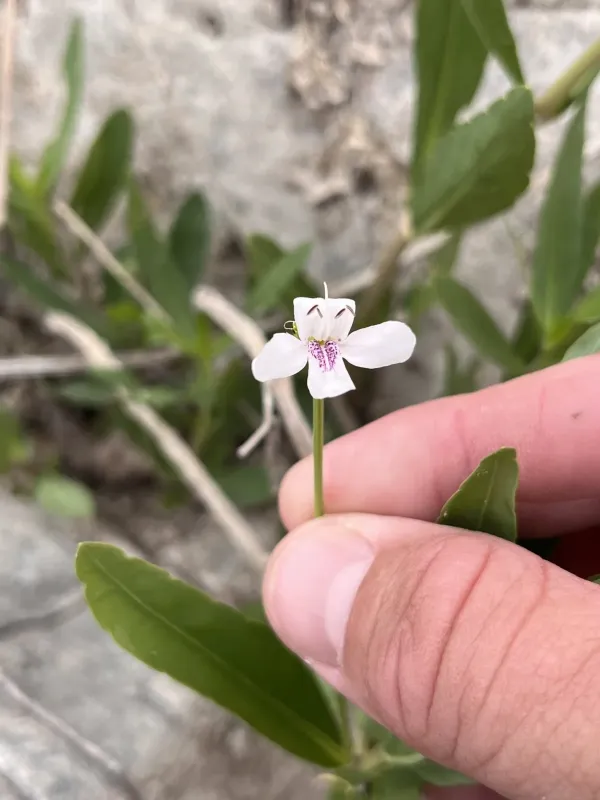
Description
Sowing dates
American water-willow (Justicia americana) is a hardy perennial herb that belongs to the Acanthaceae family, well-known for its role in wetland ecosystems.
Propagation is primarily achieved through division of rhizomes during the dormant season or early spring to ensure rapid establishment in new locations.
Seeds can also be used; however, they require specific cold stratification to break dormancy and must be sown in saturated soil to germinate successfully.
When planting, ensure that the rhizome segments are buried securely in the substrate, allowing the shoots to emerge above the waterline as they grow.
Establishing the plant in a nursery container before transplanting it into its permanent aquatic site is often recommended to improve survival rates.
Growing requirements
This species is a true hydrophyte, meaning it requires consistently wet soil or shallow water conditions to thrive throughout the growing season.
The ideal depth for planting ranges from a few centimeters to about 30 centimeters of water, favoring stable water levels to prevent dehydration.
It prefers nutrient-rich, silty substrates that provide both anchorage for the root system and essential nutrients for lush vegetative development.
Full sun exposure is crucial for the plant; partial shade may result in stunted growth and thinner foliage, reducing its effectiveness as a ground cover.
The plant is resilient across various climates but performs best in regions where the water temperature remains favorable during the peak summer months.
Yield
The utility of American water-willow is primarily focused on its ecological services, such as shoreline stabilization and habitat creation for aquatic life.
It acts as a natural biological filter, effectively sequestering excess nutrients like nitrogen and phosphorus from the surrounding water column.
Massive colonies of this plant can produce significant biomass, which is instrumental in preventing erosion along riverbanks and pond edges.
In landscaping, it provides an aesthetic, linear growth pattern that complements naturalistic water gardens and restores disturbed aquatic habitats.
While not a traditional food crop, its role in environmental engineering and water quality management provides substantial long-term value.
Main diseases and pests
Justicia americana is notably robust and resistant to most common pests and diseases that affect terrestrial agricultural crops.
Excessive herbivory from local waterfowl, particularly during the early stages of establishment, can lead to localized damage in new planting areas.
Significant changes in water chemistry or severe chemical runoff can be detrimental to the plant, potentially leading to root damage or decline.
In stagnant water, competition from invasive aquatic algae can occasionally suppress the growth of young water-willow stands.
Maintaining a healthy, balanced water flow and proper water quality is the best preventative measure against potential biotic or abiotic threats.