
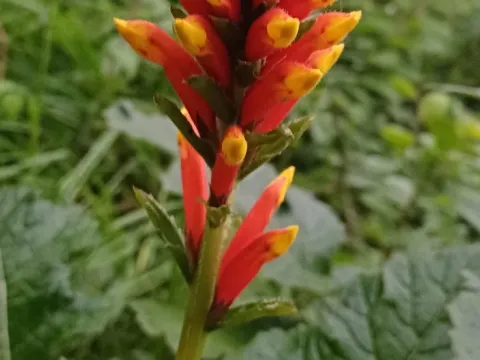
Aphelandra
Aphelandra R. Br.
Aphelandra is a genus of evergreen shrubs belonging to the Acanthaceae family, natively distributed in the tropical regions of Central and South America. In horticultural practice, it is widely recognized for its dramatic foliage with contrasting venation and its striking, cone-shaped inflorescences.
What the section contains

Aphelandra
To ensure optimal development, the culture requires a stable thermal environment ranging from +20 to +25 °C. As a tropical crop, it cannot withstand freezing temperatures, and exposure to cold drafts will cause immediate physiological stress and premature leaf drop.
The plant demands high ambient humidity, ideally between 60% and 70%. In commercial greenhouse settings, maintaining this humidity is critical to prevent the marginal necrosis of leaves and to support the healthy physiological development of the inflorescences.
Soil requirements involve a loose, well-draining, and nutrient-rich substrate with a slightly acidic or neutral pH. A common successful formulation includes a mix of peat, leaf mold, humus, and coarse sand, which provides the necessary porosity for the roots to thrive without suffocating.
The species thrives in bright but diffused light. While it requires significant light intensity to maintain its characteristic leaf patterns, direct midday sunlight should be avoided to prevent scorched leaves, necessitating the use of shade cloths in greenhouse cultivation.
Common pests affecting Aphelandra include scale insects and mealybugs. These sap-sucking insects colonize the undersides of leaves and leaf axils, causing significant stunting, leaf chlorosis, and potential secondary viral infections if left untreated.
The spider mite is a primary threat in low-humidity environments. Their feeding activity causes stippling on the leaves, followed by the appearance of fine webbing, which necessitates prompt intervention with specialized miticides to save the crop.
Root rot is the most significant disease challenge, usually stemming from over-irrigation or inadequate soil drainage. Symptoms include wilting despite moist soil, browning of the lower stem, and rapid decay of the root system, often making the plant unsalvageable.
Powdery mildew can manifest as a dusty white fungal growth on leaf surfaces, particularly in areas with poor airflow and high humidity. It severely impairs the plant's ability to photosynthesize and requires immediate application of systemic fungicides.
Integrated pest management (IPM) is essential for this crop. Regular monitoring for early symptoms of disease or infestation, coupled with maintaining proper sanitation, reduces the reliance on chemical treatments and ensures a higher quality of ornamental production.