
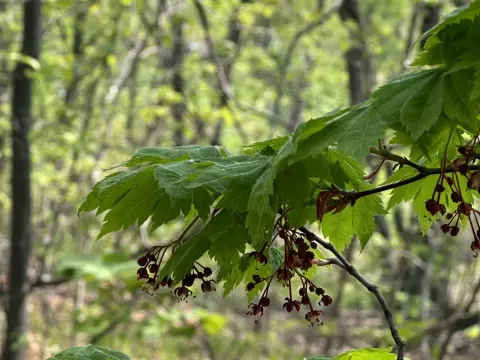
Korean maple
Acer pseudosieboldianum (Pax) Kom.
The Korean maple (Acer pseudosieboldianum) belongs to the Sapindaceae family and is highly valued for its striking autumnal foliage. It is a deciduous, slow-growing tree or shrub that exhibits exceptional hardiness, making it a favorite for temperate climate gardening projects.
What the section contains
Korean maple
Native to the forests of the Russian Far East, Korea, and parts of China, this species thrives in environments with fertile, well-draining soils. It is naturally adapted to forest edges, where it benefits from high humidity and protection from the harshest direct sunlight during the summer months.
For cultivation, the plant requires a site with partial shade to prevent leaf scorch. The soil should be slightly acidic to neutral, enriched with organic matter to support the maple's shallow, fibrous root system. Consistent moisture is critical during the establishment phase of the young tree.
Cultural practices include deep watering during drought periods and mulching the root zone to prevent evaporation and stabilize soil temperature. Fertilization is generally done in early spring with a slow-release balanced fertilizer to ensure steady growth without forcing excessive, weak shoots.
The primary use of the Korean maple is in ornamental horticulture. It is frequently employed in Japanese-style gardens, as a specimen plant, or as part of a mixed border. Its compact size and vibrant color palette make it an ideal choice for residential landscapes and urban park designs.
Powdery mildew is a common issue for the Korean maple, characterized by a white, dusty fungal growth on the leaves. Providing adequate airflow through proper spacing and occasional thinning of the canopy helps significantly in reducing the incidence of this fungal infection.
Leaf spot diseases, caused by various fungal pathogens, can cause premature leaf drop. Removing and destroying fallen leaves in autumn is a vital sanitation step, as these leaves act as a primary reservoir for the pathogens to survive the winter and re-infect the tree in spring.
Aphids can be problematic during the spring growth flush, feeding on succulent new leaves and twigs. While usually not fatal, heavy infestations can weaken the tree; insecticidal soaps or neem oil can be applied to effectively manage the pest population without harming the environment.
Scales may occasionally attach to the bark of branches, sucking the sap and causing stunted growth. Regularly inspecting the branches and applying dormant oil in the late winter can effectively suppress these pests before the growing season begins in earnest.
Verticillium wilt is a more serious vascular disease that can cause sudden dieback of branches. Since there is no cure, prevention is key: avoid wounding the roots during cultivation and ensure the tree is planted in soil that does not stay waterlogged for extended periods.