
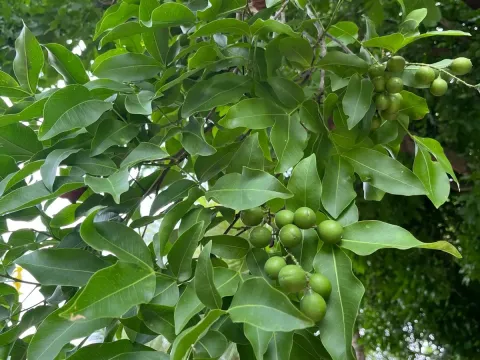
Melicoccus
Melicoccus
Melicoccus is a genus of evergreen trees belonging to the Sapindaceae family. The most widely recognized species is Melicoccus bijugatus, commonly known as honeyberry or mamoncillo, native to tropical regions of the Americas.
What the section contains

Melicoccus
The tree thrives in tropical climates where the temperature remains consistently warm. It is known for its resilience and ability to grow in various tropical lowland environments, often found in both wild and cultivated settings.
Regarding soil requirements, Melicoccus is highly adaptable, though it performs best in deep, well-drained loamy soils. It has a high tolerance for alkaline soils, which makes it suitable for regions with limestone-based geography.
Botanically, it is a sturdy tree with pinnate leaves and a dense, rounded crown. Its ability to tolerate dry seasons makes it a reliable choice for tropical orchards that experience periodic water scarcity.
Consistent temperatures above 20 degrees Celsius are essential for vegetative development. The tree does not tolerate frost, which serves as the primary limiting factor for its cultivation outside of the tropics.
The yield of a Melicoccus tree is significant once it reaches maturity. A healthy, fully-grown specimen can produce several hundred kilograms of fruit during the peak harvesting season.
The fruits develop in large, grape-like clusters. Each fruit consists of a thin, leathery green skin covering a sweet, jelly-like pulp, which is highly prized for its unique flavor profile.
In addition to fresh consumption, the fruit is commercially used to produce juices, jams, and even fermented beverages. The large seeds are sometimes roasted and consumed similarly to nuts in certain culinary traditions.
Trees grown from seeds take longer to bear fruit compared to those propagated by grafting or air-layering. Commercial orchards prioritize clonal selection to ensure earlier fruit production and consistent quality.
Optimal sunlight exposure is crucial for maximizing yield. Orchards are typically spaced to ensure each tree receives maximum solar radiation, which directly impacts the sugar content and size of the fruits.
Scale insects and aphids are the most common pests encountered in Melicoccus cultivation. They primarily target new growth and leaves, necessitating integrated pest management strategies.
Fungal diseases related to excessive leaf moisture can affect overall tree health. Ensuring good air circulation through proper pruning techniques is the most effective preventative measure against these infections.
Root rot, often caused by waterlogged soil conditions, is a major threat to tree longevity. Establishing proper drainage and avoiding deep irrigation in heavy soils are critical for long-term survival.
Fruit flies pose a constant threat during the ripening phase. The use of biological controls or localized trapping is recommended to reduce the need for synthetic chemical applications in organic orchards.
Regular monitoring of tree health, including checking the underside of leaves and the trunk base, helps in early detection of potential stress indicators caused by pests or pathogens.
Harvesting is performed by hand-clipping entire clusters to avoid skin damage. This careful handling ensures that the fruit maintains its aesthetic and culinary appeal for the marketplace.
Maturity is judged by the color of the skin and the sweetness of the pulp. Careful selection is required, as the fruits do not ripen significantly after being detached from the tree.
Once harvested, the fruit is highly perishable. It must be transported to storage facilities quickly to maintain quality, as the high sugar content makes it susceptible to rapid spoilage in warm climates.
Ventilated crates are essential for transport to prevent moisture buildup and fungal development. Improper packing and stacking can lead to mass bruising of the delicate fruit clusters.
Ongoing agricultural research focuses on dwarfing techniques to make harvesting more efficient, reducing labor costs associated with picking fruit from the top canopy of the large trees.