
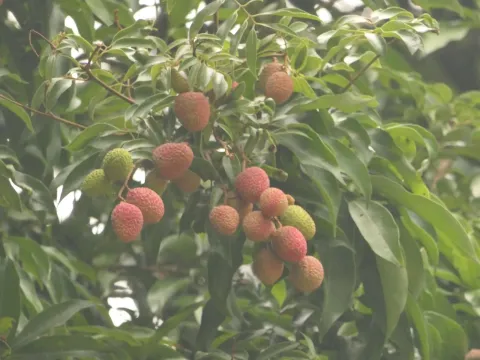
Lychee
Litchi
Lychee (Litchi chinensis) is a subtropical evergreen fruit tree belonging to the Sapindaceae family. Originally native to the Guangdong and Fujian provinces of China, it has become a valuable commercial crop in many tropical regions worldwide.
What the section contains

Lychee
The tree thrives in regions with hot, humid summers and short, cool, dry winters. This temperature fluctuation is essential for triggering flower bud development; without the cooler period, the tree often fails to produce a viable crop.
Optimal soil conditions for lychee include deep, well-drained, slightly acidic loamy soils. The root system is relatively shallow and sensitive to waterlogging, necessitating excellent soil structure and the prevention of standing water.
Cultural management involves regular mulching to maintain soil moisture and moderate the temperature of the root zone. Wind protection is crucial, as the brittle branches can easily break and high winds can dehydrate the foliage during critical growth phases.
Pruning is performed annually to maintain tree shape and manage height, which facilitates pest control and harvesting. Proper light penetration throughout the canopy is necessary to encourage flowering and improve fruit quality.
Commercial yields vary significantly based on variety and orchard management intensity. Well-maintained trees can produce substantial harvests, often reaching up to 150 kilograms per mature tree annually under ideal conditions.
The lychee mite is one of the most destructive pests, causing significant leaf damage that reduces photosynthetic capacity. Integrated pest management (IPM) strategies, including biological control and targeted chemical applications, are standard in commercial orchards.
Pathogens such as anthracnose and various types of fruit rot are common threats during the maturation stage, particularly if weather conditions remain humid. Proper canopy ventilation and sanitation are the primary methods for reducing disease incidence.
Harvesting is labor-intensive and must be done by hand. The fruit is picked with a portion of the branch attached to minimize damage to the peel and prevent rapid dehydration of the harvested product.
Post-harvest handling is critical, as lychee fruit has a short shelf life. Rapid cooling (hydro-cooling) and maintaining a high humidity environment are necessary to keep the skin bright red and the pulp fresh for export and market display.