
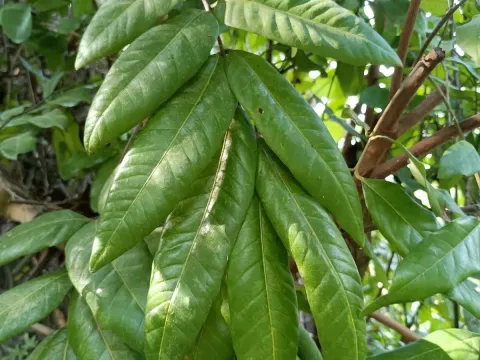
Longan
Dimocarpus
Longan (Dimocarpus longan) is a tropical tree member of the Sapindaceae family. While it can be grown from seeds, vegetative propagation, particularly air layering and grafting, is the preferred method for commercial orchards to ensure fruit quality and uniformity.
What the section contains

Longan
Air layering involves stimulating roots on a selected branch while it is still attached to the parent tree. This technique is highly effective for maintaining the desired genetic characteristics of high-yielding cultivars, ensuring consistent results in the harvest.
Proper planting involves digging pits approximately 60x60x60 cm. Incorporating compost or well-rotted manure during the planting stage provides the necessary nutrients for the sapling to establish a strong root system during its initial growth phase.
Spacing is crucial for longan orchards; trees are typically spaced 6 to 8 meters apart to accommodate mature canopy development. Proper spacing prevents competition for light and nutrients, which is vital for optimal tree health and productivity.
Initial irrigation is essential regardless of rainfall. Providing consistent moisture during the first few months post-planting helps the tree adapt to the site conditions and establishes the foundation for future vegetative and reproductive growth.
Longan trees thrive in tropical and subtropical regions. They prefer a climate with distinct seasons, including a dry period to induce flowering. While they are tolerant of various temperatures, they grow best between 22°C and 30°C and are sensitive to heavy frost.
The tree prefers well-drained, fertile soil, ideally sandy loam or clay loam with a slightly acidic to neutral pH (5.5–6.5). Avoiding waterlogged soils is critical to prevent root rot and ensure long-term vitality of the orchard.
Full sun is mandatory for longan cultivation. Trees planted in shaded areas exhibit poor flowering and lower fruit sets. Canopy management and strategic pruning are used to ensure that even the inner branches receive adequate light exposure.
Water requirements fluctuate throughout the year. Providing adequate water during fruit development is essential, whereas withholding irrigation slightly during the flower induction period can improve the intensity of the bloom.
Protection from high winds is recommended as longan branches can be brittle. Planting windbreaks such as perimeter hedges can significantly reduce damage to branches and protect the fragile flowers during the pollination season.
The yield of a longan tree varies based on cultivar and management practices. A mature, healthy tree can produce between 100 to 200 kg of fruit per year. High productivity is linked to regular nutrient supply and proper crown pruning.
Fruit sets appear in large clusters, and the timing of harvest must be precise. Potassium-based fertilizers applied during the late fruit development stage are known to increase both the sweetness and the shelf life of the harvested fruit.
In addition to fresh consumption, longan is widely processed into dried fruit, canned products, and syrups. The dried fruit market is particularly significant, as it allows for long-term storage and easier distribution compared to the fresh product.
Orchard management focuses on keeping the trees at a manageable height. Lower-profile trees allow for easier harvesting and reduce labor costs associated with manual picking, ultimately improving the overall economic viability of the farm.
Consistent pruning of dense canopy areas improves airflow within the tree. This not only increases yield by focusing energy on fruit production but also reduces the micro-climatic conditions that favor certain pests and fungal diseases.
Pests like the fruit borer are a major concern, as their larvae burrow into the fruit, making them unmarketable. Integrated Pest Management (IPM) strategies, including pheromone traps and targeted biological controls, are highly effective.
Scale insects and mealybugs often attack leaves and stems. Their feeding causes leaf yellowing and promotes the growth of sooty mold, which impairs the tree's ability to photosynthesize effectively, resulting in stunted growth.
Anthracnose is the most common fungal disease, affecting the fruit, flowers, and leaves. Maintaining a clean orchard by removing fallen debris and applying copper-based fungicides when necessary helps keep this disease under control.
Root rot, typically caused by Phytophthora species, can devastate trees in poorly drained soils. The main defense is preventing soil compaction and ensuring that the drainage system of the orchard is always functional.
- Regular monitoring of the canopy is essential for early pest detection.
- Sanitation, including the removal of infested fruits, prevents outbreaks.
- Beneficial insects like ladybirds can help control aphid populations.
- Balanced fertilization prevents nutrient deficiencies that attract pests.
- Winter or post-harvest pruning removes potential disease overwintering sites.
Harvesting is a manual operation due to the delicate nature of the fruit. Growers use cutters to remove entire clusters, which prevents skin tearing and helps preserve the longan’s natural appearance during handling and transport.
Maturity is judged by the color of the fruit skin, which turns from green to a rich yellow-brown. Because longans do not ripen after picking, timing the harvest correctly is the most important factor for fruit quality.
Post-harvest care involves quick cooling to remove field heat. Placing the harvested fruit in ventilated containers and keeping it at low temperatures ensures the product reaches the consumer in the best possible condition.
Sorting and grading are performed to meet market standards. Fruits are separated by size and freedom from blemishes, which allows farmers to command higher prices for premium-grade products in the export market.
Storage life is relatively short, often limited to less than two weeks in cold storage. For extended market access, drying the fruit to create traditional "longan nuts" remains the most robust method for preservation.