
Maryland buckeye
Aesculus marylandica
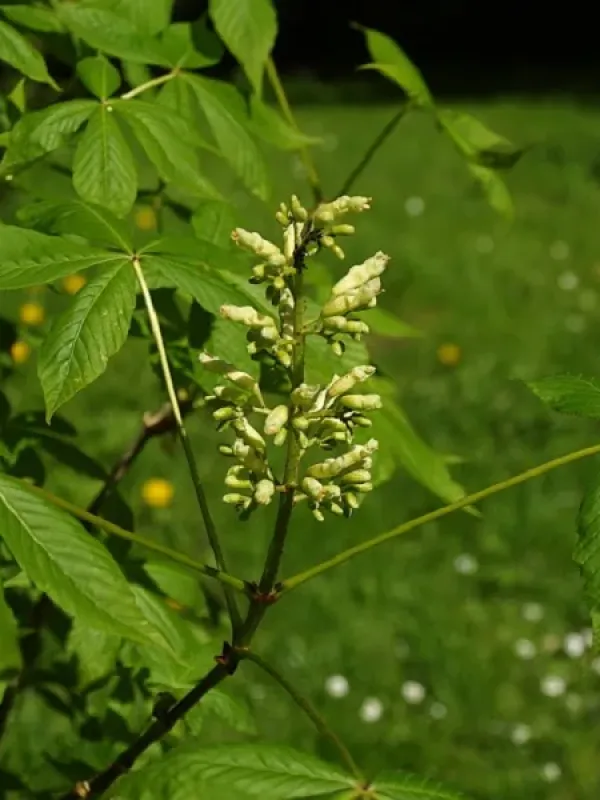
Description
Growing requirements
The Maryland buckeye, scientifically known as Aesculus marylandica, belongs to the Sapindaceae family. This tree species is highly valued for its striking appearance and serves as a significant component in ornamental horticulture and botanical landscapes.
Successful cultivation requires deep, well-drained, and nutrient-rich soils. The tree does not thrive in waterlogged conditions, which can lead to root system decay; therefore, selecting a site with proper soil structure is essential for long-term health and growth vigor.
The species prefers positions with ample sunlight to partial shade. In its juvenile stage, it benefits from protection against harsh weather, while mature trees demonstrate moderate tolerance to climate variations if provided with adequate moisture during the growing season.
Agronomic management involves regular irrigation during periods of drought to prevent leaf scorch. Fertilizer application should be focused in early spring using balanced compost or mineral nutrients to support healthy foliage development and structural integrity.
Economically, the tree is primarily utilized in urban forestry, public parks, and large-scale landscaping. Its dense foliage provides excellent shading, contributing to the cooling effect in residential and public recreational areas.
Main diseases and pests
The primary pest affecting the health of this species is the horse chestnut leaf miner, which causes significant cosmetic and physiological damage. Monitoring for infestation early in the season is critical to implement effective integrated pest management strategies.
Common pathological issues include leaf blotch and various fungal infections that can manifest in humid environments. Ensuring proper spacing between specimens to promote airflow and rigorous removal of debris at the end of the season significantly reduces pathogen pressure.