
Chir pine
Pinus roxburghii Sarg.
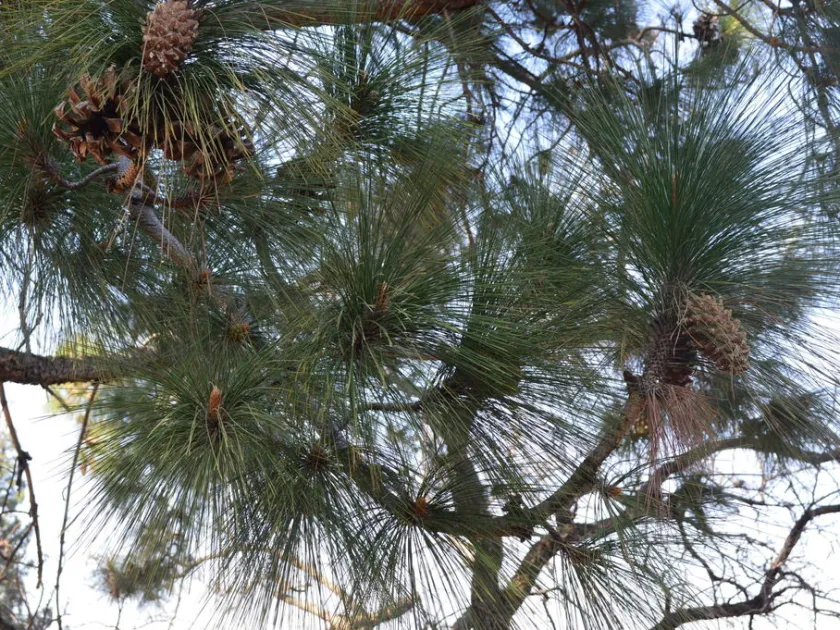
Description
Sowing dates
Propagation of Pinus roxburghii is primarily achieved through seeds, which should be collected from healthy, mature mother trees during the winter months.
Seeds require a short period of cold stratification to overcome dormancy, ensuring more uniform germination rates in the nursery environment.
The sowing process involves placing seeds into containers with porous, well-draining soil, covering them with a thin layer of sand or fine compost.
Consistent moisture is essential during the early stages of development, but the seedlings must be kept in well-ventilated areas to prevent damping-off diseases.
Once the seedlings reach a height of 20–30 cm, they are ready for transplantation into the field, provided the ground has been prepared for optimal establishment.
Growing requirements
The Chir pine (Pinus roxburghii), belonging to the Pinaceae family, is a significant coniferous species native to the Himalayan region.
This tree is well-adapted to subtropical climates, characterized by hot summers and seasonal monsoons, and demonstrates remarkable resilience to drought.
It thrives on a wide variety of soils, though it prefers deep, loamy, and well-drained substrates that allow for deep root penetration.
The species is highly heliophilous and requires full sun exposure to maintain vigorous growth, especially during its juvenile phase.
While the tree can survive in diverse topographical settings, it performs best at moderate altitudes where temperatures remain within its preferred growth range.
Yield
Chir pine is widely recognized for its industrial importance, particularly in the production of resin, which is harvested through controlled tapping methods.
The timber obtained from this species is moderately hard, durable, and extensively used in construction, flooring, and the manufacture of various wooden articles.
Sustainable forestry practices allow for consistent harvesting of both timber and resin, contributing significantly to the economic development of rural areas.
Needles and pinecones serve as secondary resources, providing materials for essential oils and biofuel production in various chemical industries.
Proper management of plantation density ensures high-quality wood production while minimizing resource competition among individual trees within the forest stand.
Main diseases and pests
Fungal pathogens such as needle blight can significantly affect plantation health, leading to premature defoliation and reduced tree growth.
Various bark beetles are known to infest the trees, especially when individuals are stressed by drought or poor site selection, requiring integrated pest management.
The parasitic plant mistletoe frequently colonizes branches, which can lead to canopy thinning and physical damage to the tree over several years.
Forest fires pose a major threat to Chir pine populations; therefore, the creation of firebreaks and regular undergrowth clearing are essential maintenance tasks.
Over-tapping of resin significantly stresses the trees, making them more vulnerable to insect attacks and pathogens, which calls for strict adherence to harvesting cycles.