
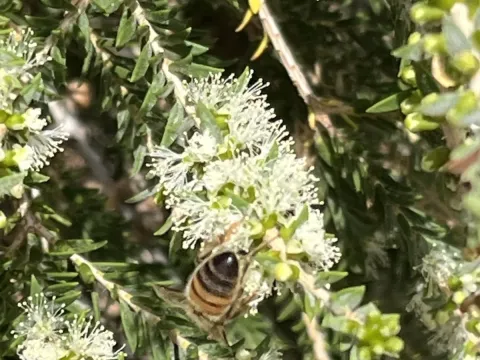
Moonah
Melaleuca lanceolata Otto
Melaleuca lanceolata, commonly known as Moonah, belongs to the Myrtaceae family. It is a hardy, evergreen shrub or small tree, known for its dense, dark green foliage and potential to adapt to a wide variety of coastal and inland environments.
What the section contains
Moonah
Originating from Australia, this species is well-documented for its resilience in harsh climates. It thrives in diverse soil types, including sandy, calcareous, and saline conditions, which makes it an excellent choice for stabilizing soils in challenging coastal areas.
The culture requires full sun exposure to maintain its dense growth form and promote blooming. While it exhibits strong drought tolerance once established, young plants need consistent moisture to ensure a robust root system during the first year of growth.
In terms of agricultural and horticultural use, Moonah is highly valued as a windbreak and a screening plant. Its aesthetic appeal, combined with its tolerance to salt spray and heavy winds, makes it a staple in Mediterranean-style landscaping and restorative ecological projects.
Cultivation management involves periodic pruning to shape the tree and maintain its health. It does not require intensive fertilization, as it is adapted to nutrient-poor soils, but it benefits from the occasional application of balanced slow-release fertilizer during the active growing season.
The most significant threat to Melaleuca lanceolata in cultivation is waterlogged soil. Poor drainage frequently leads to root rot pathogens, which are often fatal to this species when grown in containerized settings or poorly drained sites.
Pest pressures often include scale insects and mealybugs. These pests reside on the stems and undersides of leaves, weakening the plant and promoting the growth of sooty mold, which impairs photosynthesis if left unchecked.
Proper air circulation is essential for disease prevention. Regular thinning of the inner branches allows for better light penetration and airflow, significantly reducing the risk of fungal outbreaks in dense canopies.
Nutrient imbalances, particularly iron deficiency, can lead to chlorosis. Maintaining a slightly acidic to neutral pH is crucial for the efficient uptake of soil nutrients by the plant roots.
Monitoring the plant for early signs of infestation is recommended as part of routine maintenance. Using horticultural oils or insecticidal soaps can be effective for managing minor pest populations without harming the plant.