
Grey Honey-myrtle
Melaleuca incana R. Br.
Description
Growing requirements
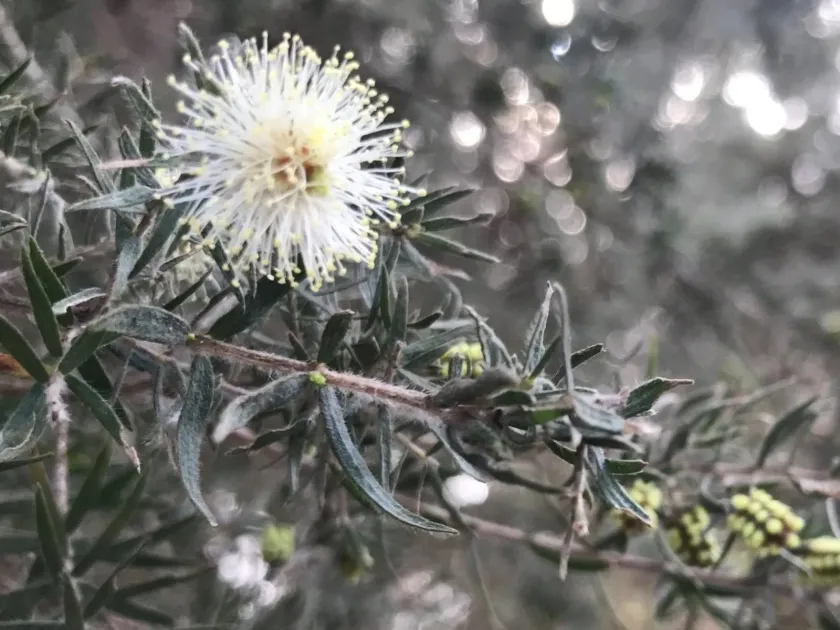
Grey Honey-myrtle (Melaleuca incana R. Br.) is a perennial evergreen shrub from the Myrtaceae family, native to Western Australia. It is recognized for its dense, silvery-grey foliage and aesthetic appeal.
The crop thrives in well-drained soils, ranging from sandy to loamy types, with a preference for neutral to slightly acidic pH levels. It is a heliophilous species that requires full sun exposure to maintain its characteristic foliage density.
Regarding climate, it is suitable for Mediterranean and subtropical zones. While it can withstand moderate wind and short dry spells, it is not highly frost-tolerant and requires protection in colder regions.
Agronomic management involves maintaining good air circulation around the plants to prevent excessive humidity, which is essential for the healthy development of this species.
It is relatively undemanding regarding nutrient content but responds well to balanced organic fertilization during the active growing season in spring and early summer.
Main diseases and pests
Major pests affecting this crop include scale insects and spider mites, which can cause significant damage to the leaf tissue, especially under conditions of low humidity or drought stress.
Fungal infections, such as root rot, are common threats if the irrigation system results in waterlogged soil, hindering the necessary gas exchange at the root zone.
Prevention relies on strict moisture control and ensuring that the soil structure provides adequate drainage to inhibit the growth of water-borne pathogens.
Regular inspection for early signs of infestation allows for targeted intervention, reducing the need for broad-spectrum chemical treatments in the fields.
Implementing integrated pest management (IPM) practices, such as encouraging natural predators, is highly recommended for organic or sustainable production settings.
Harvesting
The primary agricultural utility of Melaleuca incana is the extraction of essential oils, which contain compounds useful for pharmacological and cosmetic applications.
Harvesting is conducted by pruning the younger, oil-rich branches. This mechanical harvesting also serves to promote branching and maintain a compact, bushy structure of the plantation.
Post-harvest, the biomass should be processed promptly via steam distillation to prevent the degradation of volatile essential oils and ensure the highest possible output quality.
In landscaping and horticulture, the harvest cycle is often synchronized with aesthetic maintenance, where light pruning after flowering encourages new growth and future blooms.
Sustainability in production is achieved through crop rotation or proper spacing between plants, allowing for high biomass yield over a multi-year harvesting cycle.