
Melaleuca pentagona
Melaleuca pentagona Labill.
Description
Growing requirements
Melaleuca pentagona belongs to the Myrtaceae family, native to the southwestern regions of Western Australia. This evergreen shrub thrives in sandy plains and heathland environments, demonstrating remarkable adaptation to nutrient-poor soils.
Successful cultivation requires well-draining soils with a slightly acidic to neutral pH. Providing optimal drainage is critical for this species, as stagnant water is detrimental to its root system and leads to rapid physiological decline.
The climate requirements include high levels of solar exposure and a temperate to subtropical environment. While it is hardy in its natural habitat, commercial cultivation should be restricted to frost-free regions or protected environments where thermal stress is minimal.
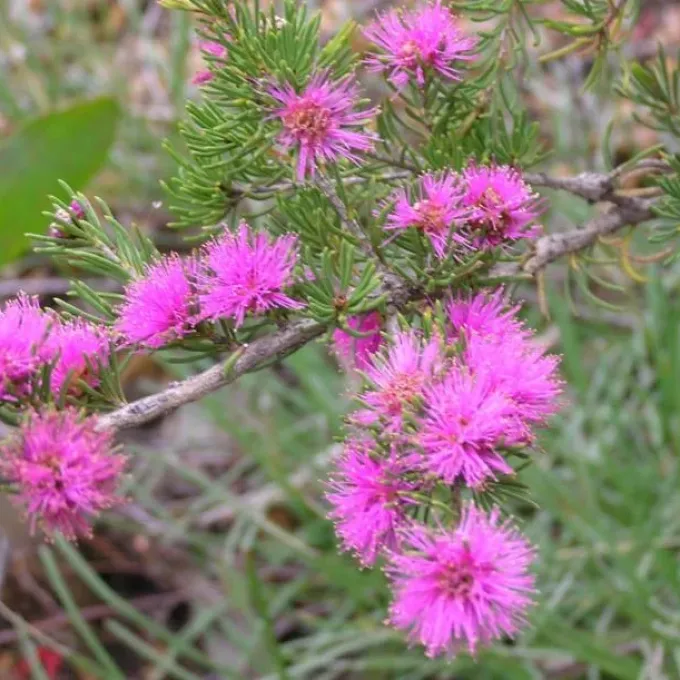
Botanically, the plant is characterized by its linear foliage and unique terminal inflorescences that often feature pentagonal structural elements. The shrubs typically grow to a moderate height, making them excellent candidates for managed hedges and specialized botanical landscapes.
Regarding хозяйственное use, Melaleuca pentagona is primarily valued for its ornamental appeal, though it holds potential in the essential oil industry. The secondary metabolites found in its leaves are subjects of interest for their potential antimicrobial and aromatic properties.
Main diseases and pests
Root pathogens, particularly Phytophthora species, are the primary threat to the health of Melaleuca pentagona. These soil-borne organisms flourish in waterlogged conditions and can cause severe chlorosis and wilting within a short period.
Pest pressures often involve mites and scale insects that colonize the undersides of the leaves. These pests extract sap from the plant tissue, causing leaf drop and weakening the overall vigor of the shrub, especially during the peak growth season.
Cultural management is the most effective approach for disease prevention, emphasizing the correct spacing of plants to ensure adequate airflow. Reducing canopy humidity is essential to avoid the formation of powdery mildew and other fungal infestations.
Integrated pest management (IPM) strategies, including the introduction of beneficial insects or the use of targeted botanical insecticides, are recommended for large-scale operations. Early detection through regular field scouting is crucial for controlling infestations before they reach economic damage thresholds.
Sanitation practices, such as removing debris and sterilizing pruning equipment, prevent the transmission of pathogens between plants. Ensuring the use of healthy, disease-free nursery stock is the foundation for any successful long-term planting program.