
Melaleuca nesophila
Melaleuca nesophila F. Muell.
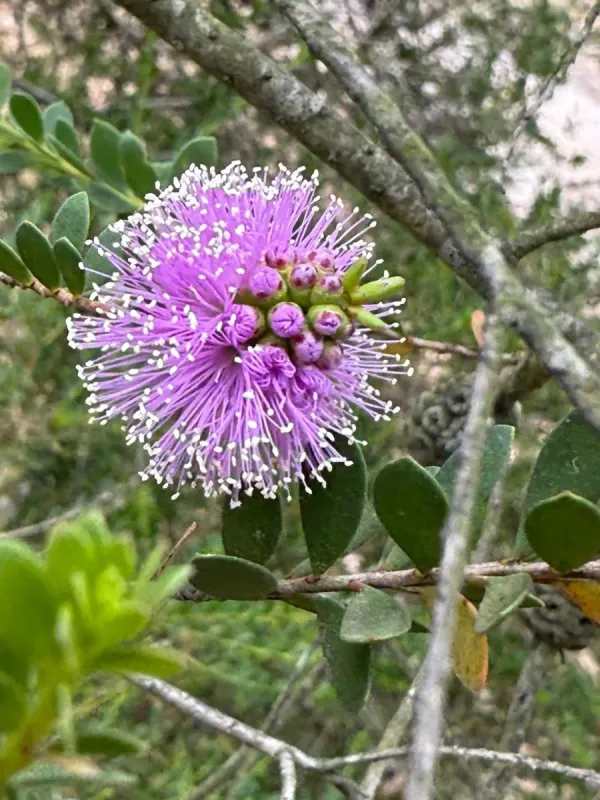
Description
Growing requirements
Melaleuca nesophila, commonly known as the Showy Honey Myrtle, belongs to the Myrtaceae family. It is a perennial woody shrub native to the coastal regions of Western Australia, where it has evolved to thrive in diverse environments.
The plant requires full sun exposure to maintain its dense growth habit and profuse blooming. It is highly adaptable to various soil types, including sandy, loamy, and gravelly soils, as long as the drainage is efficient.
Regarding climate, this species prefers mild conditions. It is noted for its ability to withstand wind and salt spray, which makes it an excellent choice for coastal gardening and areas with harsh environmental exposure.
Agronomic practices for this culture are relatively straightforward. Once established, Melaleuca nesophila is notably drought-tolerant. During the planting phase, consistent irrigation is necessary until the root system is well-developed.
Its primary horticultural use is ornamental, serving as a screen, hedge, or specimen plant. Its aesthetic value is enhanced by its distinct purple-pink flower heads and persistent woody capsules, which provide year-round interest.
Main diseases and pests
The primary concern for Melaleuca nesophila is root rot, typically caused by poor drainage or excessive soil moisture. This condition can rapidly compromise the health of the plant if water stagnation occurs.
Pests that occasionally impact the shrub include scale insects and mealybugs. These pests thrive in crowded foliage conditions and can suck plant sap, leading to stunted development and sooty mold growth.
Effective management includes maintaining good air circulation through regular pruning. Removing overlapping branches helps to keep the inner canopy dry and reduces the habitat for potential insect infestations.
In cases of severe infestation or disease, application of appropriate pesticides or fungicides may be required. Integrated Pest Management (IPM) practices are recommended to preserve the local pollinator population.
Proper plant spacing during the sowing or planting phase is vital to minimize the risk of humidity-related fungal infections, as it ensures adequate sunlight and airflow reach the center of the shrub.