
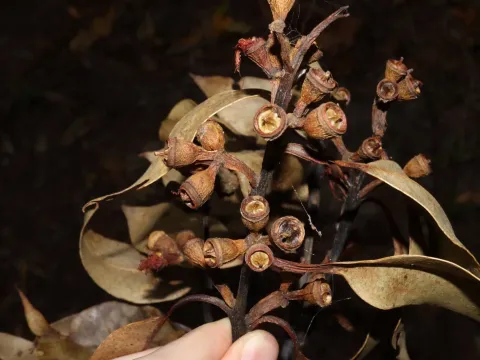
Eucalyptus pellita
Eucalyptus pellita F. Muell.
Sowing of Eucalyptus pellita seeds is typically performed in specialized nurseries under controlled conditions. The optimal timing is the beginning of the wet season, which provides seedlings with a favorable start for rooting.
What the section contains
Eucalyptus pellita
Seeds are sown in a substrate with high air permeability, ensuring uniform moisture levels. The germination process requires stable temperatures and diffused light to prevent the seedlings from stretching.
Transplanting seedlings into the open field is carried out when they reach a height of 20–30 cm. It is important to harden off the seedlings before transplanting to increase survival rates in their permanent location.
The spacing between plants in industrial cultivation ranges from 3 to 4 meters. This planting density ensures optimal competition and promotes the formation of a straight trunk without significant branching.
To ensure a high survival rate in plantations, drip irrigation is used in the first months after transplanting. This is critical for the formation of a powerful root system in young stands.
Eucalyptus pellita is a member of the Myrtaceae family, native mainly to the tropical and subtropical zones of Australia and New Guinea. The crop is prized for its outstanding growth rate in hot, humid climates.
The tree prefers deep, well-drained alluvial soils or red earths with good water retention. The crop does not tolerate waterlogging and long periods of standing water in the root zone.
Optimal temperature ranges for active growth vary from +20 to +30 degrees Celsius. The species is extremely sensitive to frost, which limits the range of industrial cultivation to the tropical belt.
The plant requires high rainfall, preferably in the range of 1200–2500 mm per year. During prolonged dry periods, biomass growth rates decrease significantly, which negatively affects wood quality.
Agro-techniques require the application of complex fertilizers containing nitrogen, phosphorus, and potassium during the soil preparation stage. Regular weeding in the first two years of life is mandatory to eliminate competition for nutrients.
The productivity of Eucalyptus pellita under intensive management reaches impressive figures. Under optimal conditions, plantations provide wood increments of up to 20–30 cubic meters per hectare per year.
The commercial use of the crop is focused on the production of pulpwood, cellulose, and sawn timber. The dense and durable wood of this species is highly valued in the furniture industry and construction.
The wood has excellent processing characteristics: it is resistant to decay and pests, which expands its range of applications. Eucalyptus pellita is also used in reforestation projects due to its ability to quickly form a canopy.
Breeding efforts are aimed at increasing biomass yield and improving the physical and mechanical properties of the trunk. Modern clonal plantations allow for the standardization of raw material quality, which is essential for wood processing plants.
The economic efficiency of the crop depends on the chosen rotation cycle. Typically, industrial cycles range from 10 to 15 years, depending on the intended use of the harvested wood.
The main threats to plantations are fungal diseases that develop under high humidity conditions. For example, Cylindrocladium species can cause severe foliage damage and the death of young seedlings.
Pests such as weevils and various leaf-eating insects can cause significant damage, reducing the rate of photosynthesis. Damaged trees become vulnerable to secondary infections.
To control pest populations on large plantations, integrated protection methods are used, including biological agents. This allows for the minimization of chemical load on the ecosystem.
An important aspect is prevention: the use of high-quality planting material that is resistant to local pathogens. Monitoring the health of the stands at the beginning of the rainy season is also recommended.
Other hazards include forest fires during dry periods. Firebreaks around the perimeter of plantations are an essential element of the agricultural layout of the territory.
Harvesting of Eucalyptus pellita is carried out by clear-cutting when the trees reach commercial diameter. The process is mechanized using harvesters, which allows for rapid processing of trunks directly on the site.
After harvesting, it is important to correctly assess the condition of the stumps, as eucalyptus is capable of coppice regeneration. This allows for savings on planting the second generation of the crop, which significantly reduces the cost of timber.
Biomass collection includes sorting wood into industrial and energy fractions. High-quality straight-trunk parts are sent to sawmills, while the rest is processed into wood chips or fuel.
The logistics of transportation must be streamlined to avoid moisture loss or wood degradation. It is optimal to remove raw materials from the plantation within a few days of harvesting for further processing.
After logging operations, the area is cleared of slash. This prevents the accumulation of infectious agents and facilitates rapid soil recovery before the next growth cycle.