
Eucalyptus marginata
Eucalyptus marginata Donn ex Sm.
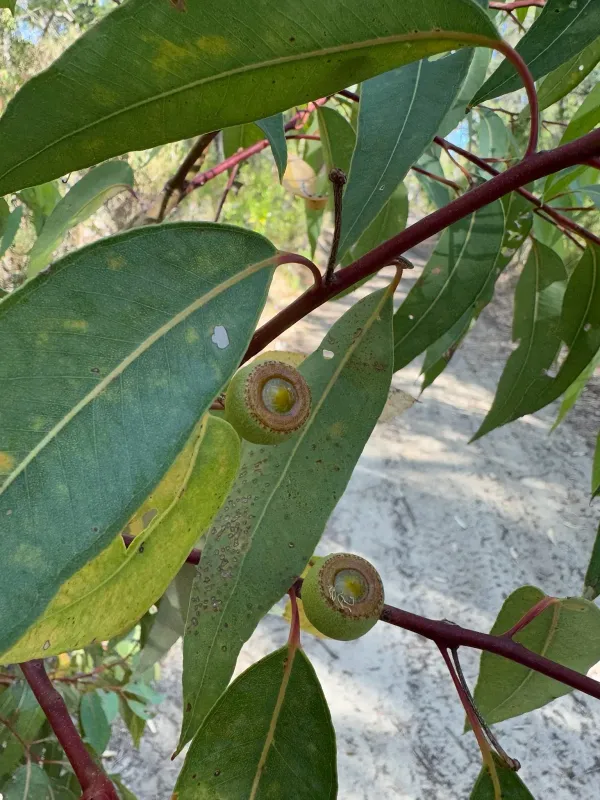
Description
Growing requirements
Eucalyptus marginata, commonly known as Jarrah, belongs to the Myrtaceae family. It is a robust, evergreen tree species native to the southwestern corner of Western Australia, playing a crucial role in local forest ecosystems and timber production.
The plant thrives in well-drained, nutrient-poor lateritic soils, which are characteristic of its native habitat. It is highly adapted to a Mediterranean climate, showing remarkable resilience during hot, dry summers by regulating water loss through its thick, leathery leaves.
Botanically, the species is distinguished by its deep taproot system, which allows it to access groundwater during severe droughts. The bark is characteristically rough, fibrous, and persistent, providing excellent protection against high temperatures and minor fire events.
Agronomic management of Jarrah requires careful site selection to avoid waterlogged conditions. Successful establishment of new plantations depends on controlling competing vegetation during the early stages of growth, as the tree is slow to reach maturity.
The primary economic use of Eucalyptus marginata is for its high-quality timber, which is renowned for its strength, density, and resistance to decay and termites. It is a preferred material for high-end furniture, heavy construction, and exterior decking.
Main diseases and pests
The most significant threat to the survival of Eucalyptus marginata is the water mould Phytophthora cinnamomi, which causes jarrah dieback. This pathogen attacks the root system, preventing the tree from absorbing water and nutrients, leading to rapid decline.
Additional threats include various defoliating insects that can reduce the photosynthetic capacity of the trees. Integrated pest management strategies and strict hygiene protocols are essential to protect healthy forest stands from the spread of infections.