
Eucalyptus regnans
Eucalyptus regnans F. Muell.
Description
Growing requirements
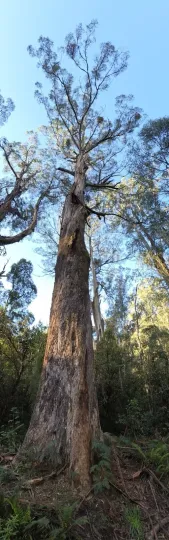
Eucalyptus regnans, commonly known as mountain ash, belongs to the Myrtaceae family and holds the record as the tallest flowering plant on Earth. In optimal habitats, these trees can reach heights exceeding 90 to 100 meters, forming towering forest canopies.
The species is native to southeastern Australia, specifically Victoria and Tasmania. It thrives in cool, humid climates with high annual rainfall, typically ranging between 1000 and 2000 mm, which necessitates specific site selection for successful cultivation.
The crop requires deep, fertile, and well-drained loam soils to support its rapid growth. It is highly intolerant of drought and extremely high temperatures, requiring a stable microclimate to reach its full productive potential in forest management systems.
Agronomic practices focus on thorough site preparation, including soil aeration and weed control. Planting is usually conducted during seasons with mild temperatures to ensure that the root systems establish firmly before they are subjected to environmental stress.
The primary economic use of Eucalyptus regnans is the production of high-quality timber, valued for furniture making, construction, and wood pulp manufacturing. Its rapid growth rate makes it a significant species for managed forest plantations in suitable ecological zones.
Main diseases and pests
Fire is the most significant threat to Eucalyptus regnans stands. Unlike many other eucalyptus species, mountain ash lacks thick bark or lignotubers, making it highly susceptible to death during intense forest fires, which often destroy entire populations.
Insect pests, such as leaf-eating beetles and weevils, can cause substantial damage to young trees. Severe defoliation reduces the photosynthetic capacity of the plants, thereby slowing growth rates and decreasing overall wood quality.
Root rot pathogens, particularly in areas with poor drainage or excessive soil moisture, can lead to widespread mortality. Managing the hydrological conditions of the soil is crucial to preventing the onset and spread of soil-borne diseases.
Competition from understory vegetation and fast-growing weeds can severely hinder the development of seedlings. Effective silvicultural management, including timely weeding, is necessary to ensure the survival of young trees during their establishment phase.
Regular phytosanitary monitoring is essential to detect pest outbreaks or fungal infections early. Integrated pest management strategies are often required to maintain the health and vigor of these tall, sensitive trees within a commercial forestry context.