
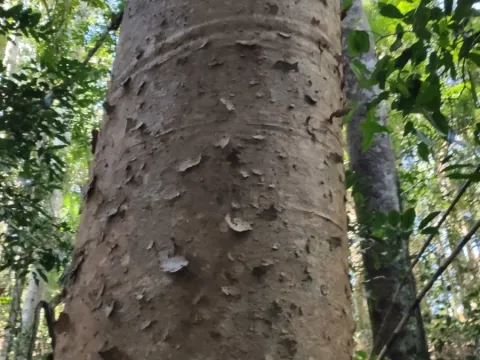
Queensland kauri
Agathis robusta
Sowing of Queensland kauri is primarily conducted in specialized forestry nurseries. Seed viability is relatively short, so seeds should be sown shortly after collection from the mature cones.
What the section contains
Queensland kauri
The optimal time for sowing is during the spring when temperatures are consistently warm. A light, well-drained, and nutrient-rich soil medium is essential for seed germination and initial growth.
Seeds should be kept moist but not waterlogged. In a nursery setting, a light shade is provided to protect the delicate seedlings from the harsh intensity of direct tropical sun.
Seedlings are typically grown in containers until they reach a height of 30 to 50 centimeters. This container-based method ensures root development stability before the final field planting.
Transplanting into the permanent site requires careful handling of the root system to prevent transplant shock, which is critical for the long-term survival of this species.
Queensland kauri is a member of the Araucariaceae family, originating from subtropical regions. It thrives in areas with consistent high humidity, significant rainfall, and warm temperatures year-round.
The tree prefers deep, fertile, and well-draining soils. It is particularly sensitive to soil compaction and waterlogging, which can lead to root system failure and stunted tree development.
While the species is light-demanding at maturity, young trees often benefit from partial shade, mimicking the conditions of the natural forest floor during their early development stages.
Climate adaptability is limited; this tree does not tolerate severe frosts. Exposure to freezing temperatures can cause significant damage to the needles and structural branches.
Proper silvicultural management involves regular monitoring of soil fertility and applying balanced fertilization in the first few years to accelerate height growth and strengthen the trunk.
The yield of Agathis robusta is measured by the quality and volume of timber produced per hectare. Known for its clear, straight grain, the wood is highly valued for its durability.
The timber is extensively used in high-end furniture manufacturing, musical instruments, and marine construction. Its uniform density makes it an ideal material for precision woodworking.
Productivity is maximized through strategic spacing and thinning practices. These management actions allow individual trees to reach their maximum growth potential without competition for light or nutrients.
Resin production, known as kauri gum, serves as a valuable secondary product. Harvested through careful tapping, the resin has historical and industrial significance in varnishes and adhesives.
Effective forest management cycles ensure a sustainable timber yield over the long term, allowing for periodic harvests that maintain the economic viability of the plantation.
Root rot pathogens represent a significant threat to Queensland kauri, particularly in poorly drained soils. Managing moisture levels is the most effective preventative measure against these fungi.
Wood-boring insects can become problematic, especially if trees are stressed by drought or environmental factors. Regular sanitary inspections help identify and remove infested wood early.
Fire is a major hazard for this species due to its resinous nature. Plantation areas must be protected with cleared firebreaks and active monitoring during the dry seasons.
While foliage diseases are not typically lethal, they can affect growth rates if infestations become severe. Integrated pest management strategies are recommended to maintain plantation health.
Ensuring site-specific biodiversity in plantations acts as a natural buffer against the widespread impact of specialized pests and pathogens that could otherwise devastate a pure monoculture.
Harvesting timber from Queensland kauri involves selective logging practices that align with sustainable forestry standards. This ensures that the forest structure is preserved for future growth.
Timing the harvest is critical; winter or dry season operations are preferred to ensure the timber's moisture content is manageable, which improves the drying process and overall wood quality.
Post-harvesting logs must be transported promptly to milling facilities. Proper storage and protection from moisture help prevent staining and insect degradation of the harvested materials.
Wood processing waste, including bark and offcuts, can be repurposed for mulching or bioenergy, contributing to a circular economy within the forestry operation.
Following a harvest, site reforestation is immediate. Planting new seedlings ensures the cycle of production continues and helps maintain the carbon-sequestration benefits of the stand.