
Agathis atropurpurea
Agathis atropurpurea
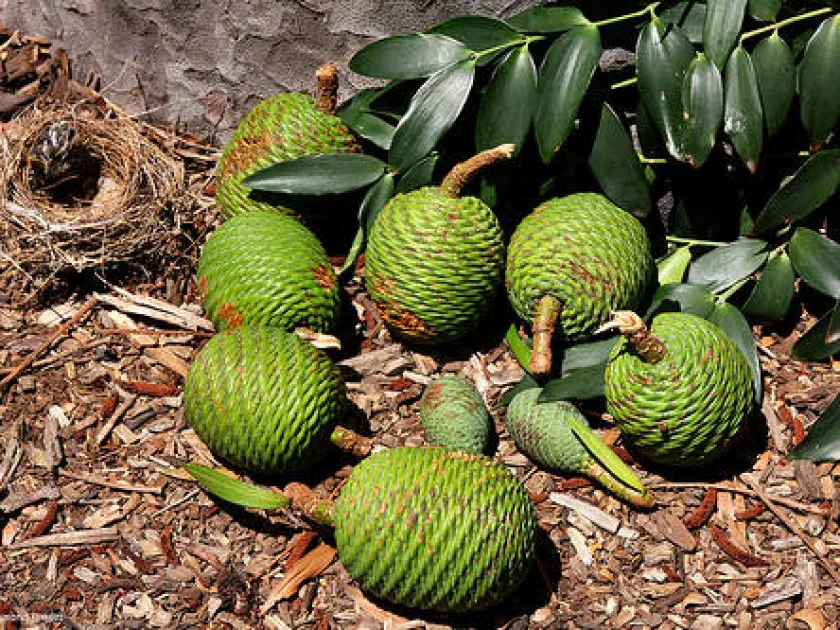
Description
Growing requirements
Agathis atropurpurea, commonly known as the black kauri, belongs to the Araucariaceae family. It is a slow-growing evergreen conifer native to the tropical montane rainforests of North Queensland, Australia.
The species thrives in specific ecological niches characterized by high atmospheric humidity and relatively stable temperatures. It demands well-drained, acidic, and nutrient-rich soils to maintain healthy growth and root development.
Agathis atropurpurea is highly sensitive to environmental fluctuations. In its natural habitat, it requires the protective canopy of surrounding trees during its early stages of development to survive and flourish.
Botanically, it is distinguished by its unique leaf coloration, which can transition into deep purple hues, and its structural adaptation to high-altitude tropical environments where mist and fog provide essential moisture.
Cultivation of this species is primarily focused on conservation biology. Due to its slow growth rate, it is not considered a viable commercial crop for short-term agricultural or forestry production cycles.
Harvesting
Historically, the timber of Agathis was prized for its high quality, uniform grain, and durability. It was once utilized in furniture making, marine construction, and the production of specialized equipment requiring lightweight but strong wood.
In modern times, harvesting is strictly prohibited or regulated due to the rarity of the species. The primary goal is to protect existing stands and foster natural regeneration within protected areas of Australia.
Sustainable forest management practices are employed to ensure the long-term survival of the species. Research efforts are currently focused on ex-situ conservation and understanding the propagation techniques needed to increase population numbers.
The tree provides significant ecological value by stabilizing high-altitude soils and serving as a crucial component of the biodiversity in its native rainforest habitats, which outweighs any potential timber output.
Any potential future use would require extensive development of sustainable silviculture protocols that prioritize the health and genetic resilience of the species over industrial extraction.