
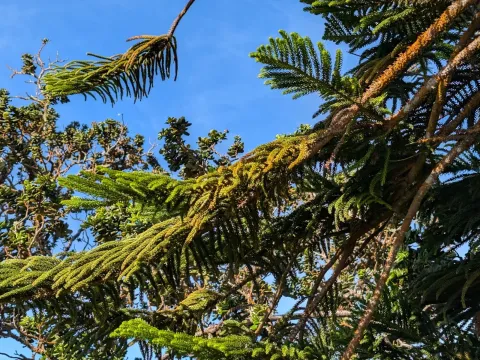
Araucaria
Araucaria
Araucaria is a genus of evergreen coniferous trees belonging to the Araucariaceae family. Known for their symmetrical growth and structural importance, these trees are managed in various silvicultural systems globally.
What the section contains


Araucaria
The culture thrives in mild, moist climates with minimal temperature fluctuations. Successful cultivation requires careful site selection, prioritizing areas that avoid extreme frost conditions which can damage younger saplings.
Soil composition is critical, necessitating deep, well-drained substrates. Araucaria species typically grow best in slightly acidic soils that prevent nutrient leaching and allow for proper root respiration.
Moisture management is key, as the trees require consistent humidity levels, particularly in the developmental stages. Effective irrigation systems in nurseries often include misting setups to mimic the natural fog environments of their native ranges.
Standard agronomic practices involve maintaining proper planting spacing to allow for adequate air circulation and sunlight penetration, which helps in preventing canopy diseases and promoting robust tree trunk development.
The primary economic use of Araucaria is for high-quality timber production. The wood is valued for its uniformity, workability, and strength, making it ideal for furniture manufacturing and structural engineering.
Seed production serves as a secondary revenue stream for several species. These seeds are edible and form a significant part of the harvest in specific geographical regions where the tree is cultivated for food purposes.
Yield estimation is a long-term process, given the relatively slow growth rate of many Araucaria species. Forest management plans often span several decades to ensure a sustainable rotation and consistent timber output.
In addition to timber and seeds, the nursery trade generates significant demand for Araucaria as an ornamental species. Cultivated specimens are highly sought after for large-scale landscaping and public park design.
The overall yield success depends on the synergy between site selection and silvicultural interventions, such as thinning and pruning, which improve the quality of the final wood products.
Fungal infections are the most significant threat to Araucaria plantations. Root rot, typically caused by waterlogged soil, can lead to widespread damage and mortality within a forest stand.
Insect pests, including various scale insects and mealybugs, are frequent challenges. These pests weaken the trees by extracting sap from the needles and small branches, causing stunted growth and aesthetic decay.
Spider mites represent a major concern during dry, hot weather conditions. Their proliferation requires diligent monitoring and timely application of acaricides to prevent extensive defoliation of the trees.
Integrated Pest Management (IPM) is highly recommended, focusing on maintaining tree vigor through correct fertilization and moisture management to reduce susceptibility to outbreaks.
Sanitation practices, such as the removal of infected plant debris and quarantine for new nursery stock, are essential to minimize the risk of pathogen spread throughout the growing area.