
Philippine Agathis
Agathis philippinensis
Description
Growing requirements
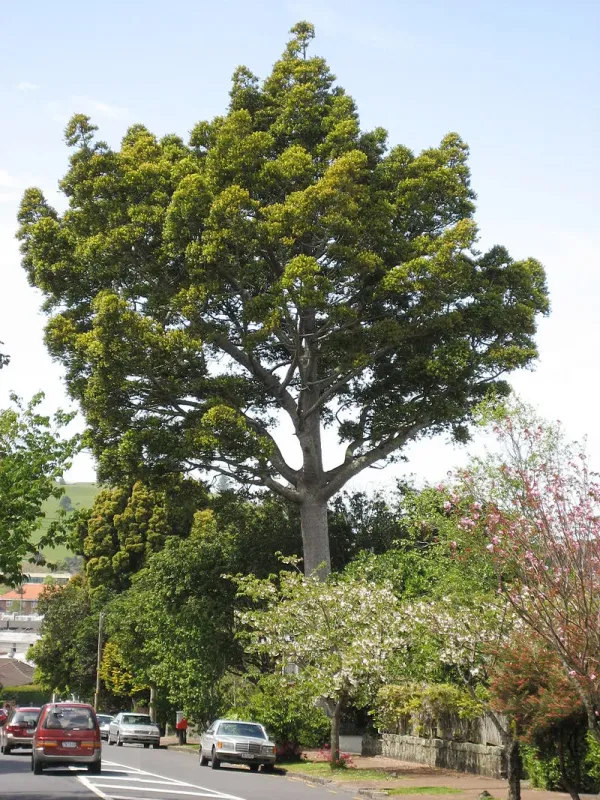
The Philippine Agathis (Agathis philippinensis) is a majestic conifer belonging to the Araucariaceae family. This towering evergreen species can grow up to 60 meters in height, featuring a straight and massive trunk.
Native to the Philippines, this species thrives in lush, humid tropical rainforests. It is typically found at elevations ranging from 200 to 2000 meters, preferring nutrient-rich, well-drained forest soils.
The cultivation of this tree requires a warm and consistent climate without harsh frosts. Proper soil acidity and moisture levels are essential for young seedlings, which are particularly sensitive during their initial growth phase.
Light management is crucial, as the species undergoes a transition from shade-tolerant juvenile growth to light-demanding maturity. Providing a canopy-like environment in early stages is standard practice.
Overall, the plant requires a stable environment with minimal exposure to extreme weather events, ensuring that the roots remain protected from stagnant water conditions.
Yield
The primary yield from Philippine Agathis is its high-quality timber, often traded as a premium soft wood. It is highly valued for its straight grain, workability, and light color.
Industrially, the wood is utilized in furniture manufacturing, high-end cabinetry, and the production of musical instruments, thanks to its excellent acoustic properties and structural stability.
In addition to timber, the tree yields a valuable resin known as dammar. This substance is harvested through regulated tapping and serves as a key raw material in varnishes, coatings, and adhesives.
As a long-rotation crop, the economic yield is harvested over decades. Sustainable management is required to balance timber extraction with the preservation of the forest stand.
Consistent volume production is achieved through meticulous silvicultural practices, ensuring that the trees reach their harvestable dimensions with minimal defects.
Main diseases and pests
The species faces significant threats from habitat loss and deforestation, which jeopardize its wild population numbers and overall genetic diversity.
In managed plantations, root rot fungi represent a serious threat, especially if drainage systems are inadequate or if the soil becomes overly saturated.
Leaf-feeding insects and various wood-boring pests can cause substantial damage to younger trees, requiring regular health assessments and integrated pest management.
Invasive species or competition from faster-growing vegetation in early stages can suppress the development of young Agathis individuals if not properly cleared.
- Root rot caused by fungal pathogens.
- Damage to bark by local small mammals.
- Defoliation from pest insect outbreaks.