
Araucaria rulei
Araucaria rulei
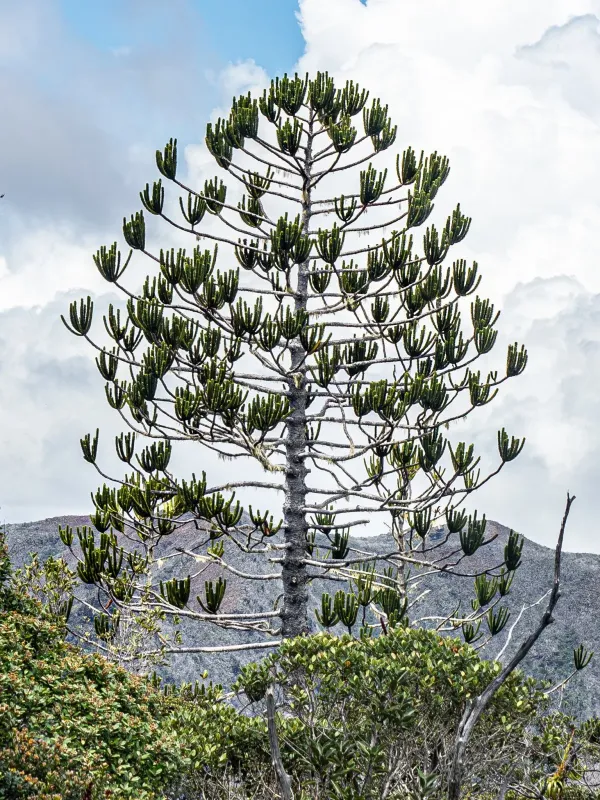
Description
Growing requirements
Araucaria rulei is a majestic evergreen conifer belonging to the Araucariaceae family. Native to New Caledonia, this species is noted for its distinctive, coarse foliage and a symmetrical growth pattern that makes it a prized specimen in specialized botanical collections.
The species naturally occurs in high-altitude environments characterized by ultramafic soils. This specific ecological niche dictates the plant's needs in cultivation, where well-drained, porous growing media are essential to mimic its natural substrate.
Araucaria rulei demands a stable climate with high humidity and moderate temperatures. It lacks frost tolerance, making it strictly a greenhouse or conservatory plant in temperate regions, requiring protection from both freezing cold and intense heat.
Agrotechnical management requires precise irrigation. Watering should be deep but infrequent, allowing the top layer of the substrate to dry out between sessions. Over-saturation is the most common cause of root death in this species.
Proper light management involves providing bright, filtered sunlight. Exposure to harsh, direct midday sun often causes foliage scorch, whereas insufficient light leads to sparse branching and loss of the plant's characteristic formal shape.
Main diseases and pests
The primary health risks for Araucaria rulei are associated with soil-borne pathogens. Species of Phytophthora and Pythium are common threats when drainage is inadequate, leading to rapid root rot and systemic collapse.
Pest management is centered on common greenhouse pests such as spider mites and mealybugs. These insects thrive in environments with low air circulation and low humidity, making proper ventilation critical for disease prevention.
Scale insects can also be a significant issue, attaching to the woody stems and branches. Manual removal combined with systemic insecticides is the standard treatment protocol for managing larger infestations.
Fungal leaf spot diseases can occur if the canopy remains wet for prolonged periods in cooler conditions. Keeping the foliage dry and maintaining good airflow around the tree are essential preventive measures.
Nutrient imbalances often present as chlorosis or premature needle drop. A balanced, low-phosphorus fertilizer designed for conifers should be applied during the active growth season to ensure long-term vitality.