
Agathis labillardierei
Agathis labillardierei
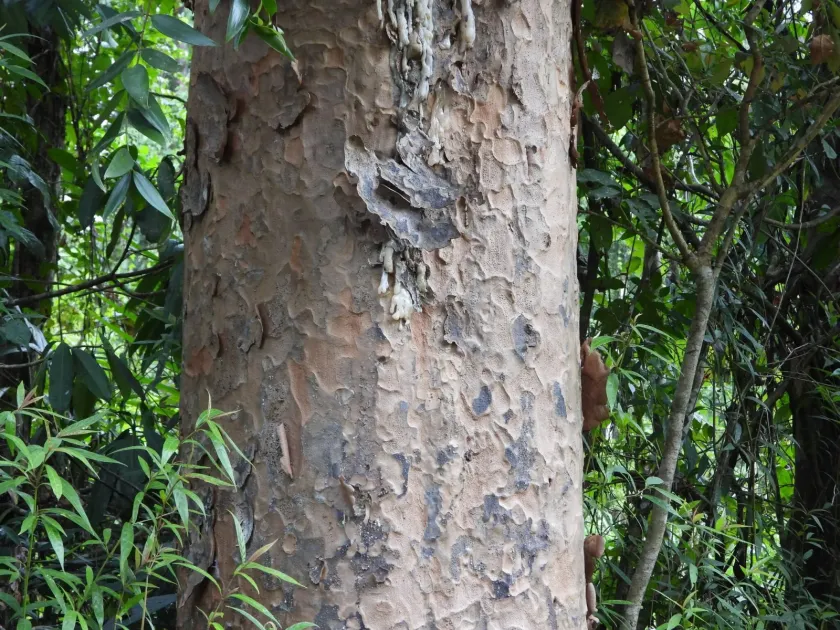
Description
Growing requirements
Agathis labillardierei is a large coniferous tree belonging to the Araucariaceae family. It is native to the lowland and mountain rainforests of Western New Guinea, where it thrives in high-humidity tropical environments.
The plant requires a specific microclimate characterized by high annual rainfall and consistent, warm temperatures. It is highly sensitive to frost and extended dry spells, which dictates its natural distribution within the humid tropics.
Regarding soil requirements, the species prefers deep, well-drained, and nutrient-rich substrates. It is essential to ensure that the site has good permeability, as the root system is sensitive to waterlogging, despite the plant's requirement for a humid atmosphere.
The growth strategy of this species involves slow initial development, requiring protection from direct sun under a canopy. In plantation settings, managed shade systems are necessary to ensure the healthy establishment of seedlings.
Agronomic management involves selecting high-quality seed sources or utilizing advanced vegetative propagation methods. Given the species' biological sensitivity, nursery management practices must focus on maintaining high humidity and balanced soil nutrition.
Harvesting
The primary economic use of Agathis labillardierei is the production of premium timber. The wood is highly prized for its consistency, fine texture, and excellent resistance to shrinkage and warping.
It is widely utilized in the manufacturing of musical instruments, boat building, and high-end cabinetry. The wood's uniform grain structure makes it particularly suitable for tasks that require precision and aesthetic appeal.
Additionally, the species is a traditional source of copal resin. This resin is extracted through controlled tapping of the bark, a practice that must be carefully managed to avoid damaging the tree's health or longevity.
Harvesting strategies are governed by sustainable forestry guidelines to protect natural populations. Selective logging is the preferred method to maintain the ecological integrity of the areas where these trees naturally grow.
Current research efforts are focused on improving plantation productivity and understanding the specific requirements for scaling the cultivation of this species outside its traditional native range.