
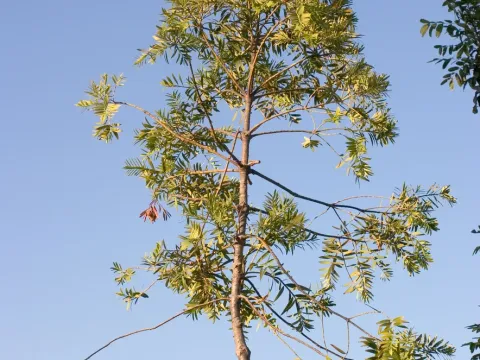
Agathis moorei
Agathis moorei
Agathis moorei, commonly known as a type of kauri pine, is a majestic evergreen conifer belonging to the Araucariaceae family. This species is endemic to the humid tropical forests of New Caledonia, where it stands as a canopy giant.
What the section contains
Agathis moorei
The culture thrives in tropical environments characterized by high humidity and consistent temperatures. It does not tolerate cold snaps or frost, necessitating a climate that remains warm throughout the entire year.
Regarding soil requirements, Agathis moorei prefers deep, fertile, and well-drained soils. It exhibits low tolerance for waterlogged conditions, which can lead to root system decay and poor development.
Botanically, the species is distinguished by its large, leathery, oval-lanceolate leaves and a straight trunk covered in exfoliating bark that sheds in irregular plates. These traits provide the tree with its distinct silhouette.
The ecological role of this tree is paramount. As a climax species in the rainforest, it regulates the microclimate below its crown and provides vital support structures for diverse epiphytic plants.
Historically, Agathis moorei has been highly prized for its timber. The wood is renowned for its uniform texture, lack of resin canals, and exceptional stability, making it ideal for specialized construction.
Modern usage of the timber is strictly regulated due to conservation priorities. Sustainable harvesting is the only permissible method for sourcing material for high-end furniture, cabinetry, and boat building.
Besides timber, the resin, often referred to as copal, serves as a valuable resource. It has been used for generations in the production of high-quality varnishes and protective coatings for diverse surfaces.
Due to its slow growth rate, the plantation-based cultivation of this species is a long-term investment. It is not a quick-rotation crop but rather one that requires decades of careful management and silvicultural expertise.
Harvesting operations are currently integrated into reforestation programs, ensuring that the removal of mature trees is compensated by the planting and protection of young saplings to maintain genetic diversity.
The primary threats to Agathis moorei are habitat loss resulting from deforestation, mining activities, and agricultural expansion in its native New Caledonian range.
Pest attacks, particularly by wood-boring insects, can devastate populations that have been stressed by drought or environmental degradation. Maintaining forest health is essential to mitigating these risks.
Fungal pathogens represent a significant threat to seedlings, especially in humid nursery conditions where air circulation may be insufficient, leading to damping-off and other root diseases.
Competition from invasive plant species poses a constant challenge. Non-native weeds and shrubs often outcompete slower-growing kauri seedlings for sunlight and soil nutrients in disturbed forest areas.
Climate change, manifesting as altered precipitation patterns and increased frequency of forest fires, threatens to reduce the available habitat, pushing the species toward further fragmentation and potential decline.