
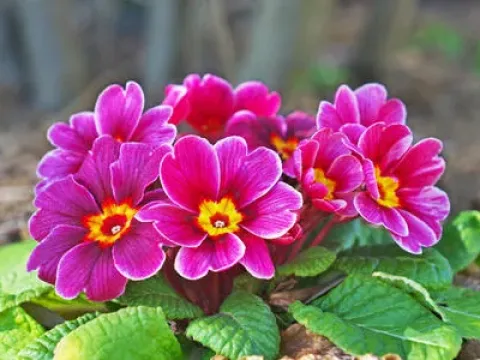
Polyanthus primrose
Primula polyanthus
Polyanthus primrose (Primula polyanthus) belongs to the Primulaceae family. It is a group of hybrids valued for their large flower clusters and wide range of colors. Commercially, these plants are primarily grown from seed in a controlled environment.
What the section contains
Polyanthus primrose
Sowing should take place in early winter using a high-quality seed starting mix. Primrose seeds require a period of stratification to break dormancy; placing trays in a cool environment (0–5 degrees Celsius) for two to three weeks significantly improves germination rates.
Since the seeds are light-dependent, they must be sown on the surface of the soil rather than buried. Light pressure to ensure good contact between the seed and the medium is sufficient. Keeping the seed tray moist is vital for success.
Optimal germination occurs at temperatures between 15 and 18 degrees Celsius. Once germination begins, provide adequate light to prevent the seedlings from becoming leggy. Maintaining a consistent moisture level is critical during this delicate stage.
Transplanting into individual cells or small pots occurs after the development of true leaves. During this phase, plants require a nutrient-rich, well-draining medium and consistent air circulation to promote sturdy growth and prevent damping-off disease.
Polyanthus primroses thrive in semi-shaded areas, particularly those receiving morning sun and afternoon shade. Excessive heat and direct sunlight can be detrimental, leading to wilting and reduced flower size.
The ideal soil is moisture-retentive, fertile, and slightly acidic to neutral. Incorporating organic matter, such as leaf mold or well-rotted peat, helps maintain the soil structure and nutrient profile necessary for vigorous growth.
Watering must be regular and thorough, as these plants are highly sensitive to drought. In garden settings, the soil should never dry out completely, particularly during the active growing season in late spring.
Fertilization should be handled with care. A balanced liquid fertilizer applied during the growth stage encourages lush foliage, while phosphorus-rich formulas can be used as the plant approaches the flowering period.
For long-term maintenance, mulch is highly beneficial. It keeps the roots cool, suppresses weeds, and maintains soil moisture levels. A layer of organic mulch applied in late fall also protects the plants during winter dormancy.
Gray mold (Botrytis) is the most prevalent threat, especially in humid and stagnant air conditions. Proper ventilation and removing dead or decaying foliage are essential preventive measures to maintain plant health.
Powdery mildew can affect plants in dry, warm conditions. It presents as a fine white dusty layer on leaves. Improving airflow and avoiding overhead watering during the evening can significantly reduce the risk of infestation.
Aphids and spider mites are common pests that feed on sap, leading to leaf distortion and yellowing. Regular monitoring is advised, and biological or chemical control agents should be applied at the first sign of pest activity.
Root rot caused by waterlogged soil is a major risk. Ensuring that containers have adequate drainage holes and that garden beds are not located in low-lying, wet areas is critical to prevent fungal decay of the root system.
Slugs and snails are particularly problematic for young plantings. Using physical barriers, such as copper tape or crushed eggshells, or applying effective molluscicides helps protect the foliage from extensive feeding damage.