
Orange primrose
Primula aurantiaca
Description
Sowing dates
Sowing seeds of the Orange primrose is best achieved through winter sowing in outdoor beds or containers subjected to cold stratification. This natural cooling process is essential for overcoming seed dormancy and ensuring uniform germination.
If starting indoors, sow seeds in late winter or early spring. Surface sow the seeds on a moist, well-draining substrate as they require light to germinate effectively, ensuring they are not buried too deeply.
Maintain an ambient temperature between 15 and 18 degrees Celsius during the germination phase. Keep the surface consistently moist, using a plastic cover to prevent drying, but provide adequate ventilation to avoid fungal issues.
Prick out the seedlings once they have developed their first pair of true leaves. Transition them to individual pots to allow for stronger root development before they are hardened off and transplanted into their permanent garden location.
Plant the seedlings in the garden with a spacing of approximately 20 to 25 centimeters. Proper spacing is crucial for maintaining air circulation and reducing the risk of competitive stress among the plants.
Growing requirements
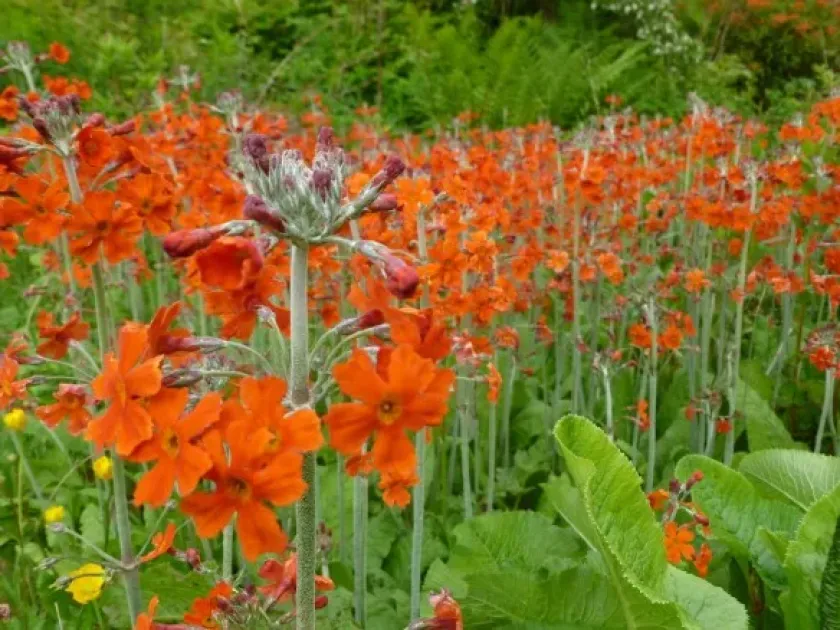
The Orange primrose (Primula aurantiaca) is a member of the Primulaceae family, native to the alpine regions of China. It is highly valued for its striking orange-red floral whorls, which bring vibrant color to shade gardens.
This species thrives in cool, moist, and well-draining soil rich in organic matter. A site with a consistent supply of moisture is ideal, though standing water must be strictly avoided to prevent root rot during dormant months.
Partial shade is the preferred environment for this culture, as it protects the foliage from intense midday heat. In garden settings, it is often placed under the canopy of shrubs or deciduous trees where light is filtered.
Regular maintenance involves keeping the soil mulched to preserve moisture and maintain a cooler root zone during warmer summer temperatures. This also helps suppress weeds that might compete for nutrients.
In colder regions, provide a light winter mulch of dry leaves or pine needles. This protection helps insulate the crown from sudden frost-thaw cycles that can damage the plant's delicate root system.
Main diseases and pests
The primary threats to this plant are fungal diseases, particularly crown rot and mildew, which thrive in stagnant, humid environments. Ensuring good drainage and avoiding overhead watering can mitigate these risks.
Slugs and snails are frequent pests that target the lush, succulent foliage of the primrose. Implementing physical barriers, such as crushed eggshells or copper tape, can effectively protect the plants from damage.
Aphids may infest the plant during prolonged dry spells, leading to stunted growth. If observed, washing the foliage with a mild insecticidal soap solution is an effective and safe management strategy.
Regular sanitation of the planting area is crucial. Removing dead or decaying leaves prevents the buildup of pathogens, ensuring the health and vigor of the primrose patch throughout the growing season.
- Cleanliness around the plant base.
- Adequate drainage systems in clay soils.
- Monitoring for early signs of leaf discoloration.