
Piedmont primrose
Primula pedemontana
Description
Growing requirements
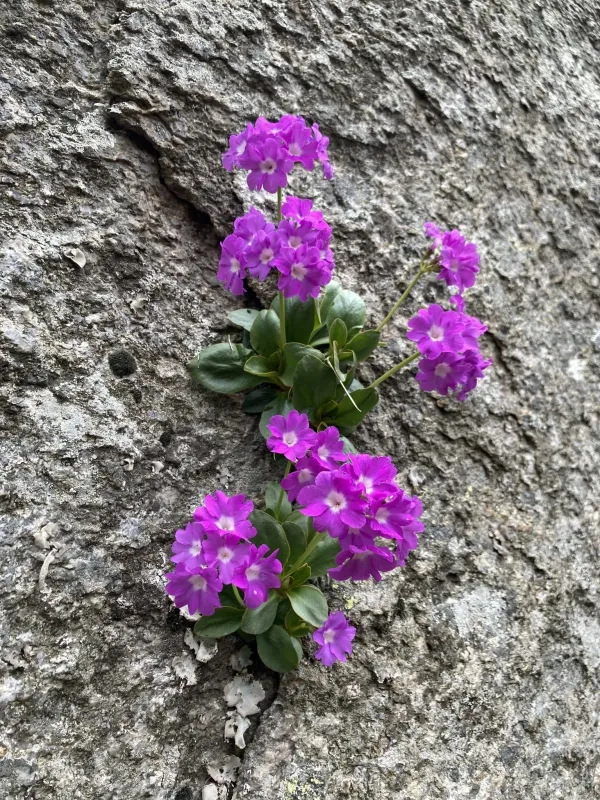
The Piedmont primrose (Primula pedemontana) is a botanical species belonging to the Primulaceae family. It is a highly specialized alpine perennial native to the western Alps, where it typically colonizes rocky outcrops and crevices at high altitudes.
The plant is characterized by a compact rosetted habit with leathery, serrated leaves that feature fine hair coverage. This adaptation allows the plant to thrive in the harsh, wind-exposed, and nutrient-poor substrates of its natural mountain habitat.
Agricultural success with this species relies on emulating its native climate. The plants require cool temperatures and a well-draining, gravelly, and humus-rich substrate. Stagnant water is fatal to the root system, making proper drainage design mandatory.
Light requirements are centered on semi-shaded or bright, indirect light positions. Excessive sun exposure in lowland gardens can lead to thermal stress and dehydration, necessitating careful site selection away from intense mid-afternoon heat.
For horticultural use, Primula pedemontana is highly valued in rock gardens and specialized collections. Its aesthetic value lies in its vibrant, purple-pink flowers that contrast beautifully with the rugged, textured foliage.
Main diseases and pests
The primary threats to this species include various root and crown rots, which are triggered by insufficient drainage or excessive humidity around the root neck. These fungal pathogens can quickly destroy the plant during dormant or wet seasons.
Pests such as gastropods, including slugs and snails, represent a major risk, especially for young, succulent growth. Additionally, spider mites can become an issue during periods of prolonged drought or heat.
Integrated pest management should prioritize sanitation, such as removing necrotic leaves and ensuring adequate airflow around the plants. Mulching with inorganic material like grit prevents leaf contact with wet soil, minimizing disease risks.
Chemical intervention should be considered only as a last resort. Maintaining the plant's health through optimal site management remains the most effective way to prevent outbreaks of pests and diseases.
Ultimately, the longevity of Primula pedemontana in cultivation depends on how effectively the gardener can replicate the balance of high air humidity, cool root temperatures, and fast-draining soil conditions found in the Alps.