
Northern rock-jasmine
Androsace septentrionalis
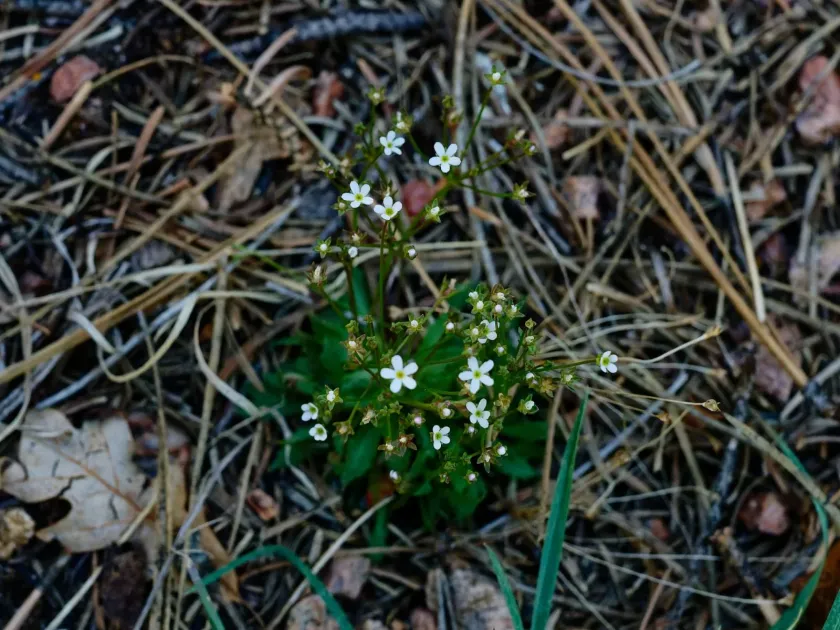
Description
Sowing dates
Northern rock-jasmine (Androsace septentrionalis) belongs to the Primulaceae family. In agricultural settings, it is recognized as a small, annual or biennial weed that thrives in disturbed soils.
The plant typically germinates in autumn, overwintering as a basal rosette. This allows it to initiate growth very early in the spring, often before crop germination is complete.
Spring-germinating cohorts grow rapidly, progressing from a rosette to a flowering stem in a very short time. Its ability to complete its life cycle quickly allows it to avoid many seasonal management practices.
Effective control relies on disrupting the plant before it transitions to the reproductive stage. Because the lifecycle is short, monitoring the field during the early spring is essential.
The persistence of seeds in the soil seed bank requires consistent agricultural management across several seasons to successfully deplete the weed population.
Growing requirements
This species prefers open, sunny environments with well-drained, sandy or loamy soils. It is particularly successful in areas where competition from other plants is minimized.
Northern rock-jasmine is remarkably hardy, showing high tolerance to cold climates and drought. It adapts well to various soil pH levels, making it a widespread colonizer in temperate regions.
In agricultural practice, it is often found in fields with thin crop stands. Maintaining a high crop density is a highly effective way to shade out and suppress this light-loving plant.
Mechanical operations like harrowing or cultivation are effective if timed correctly. Since the plant is small, shallow cultivation is often sufficient to detach the roots and prevent seed formation.
Integrated weed management, including herbicides for broad-leaved weeds, is effective if applied during the early vegetative stage. Avoiding soil compaction also helps in managing its spread.
Main diseases and pests
As a resilient species, Northern rock-jasmine is rarely impacted by major agricultural pathogens. Its natural hardiness makes it a persistent competitor in managed landscapes.
Management focuses on preventing the plant from reaching the flowering stage. Since the plant produces numerous seeds, any measure that prevents maturation is crucial for population decline.
While not a primary host for most major crop pests, its presence indicates gaps in field coverage. Controlling it helps maintain a clean field environment conducive to primary crop yields.
The lack of significant pests means that manual or chemical intervention remains the primary control strategy. Regular scouting of fields is necessary to identify patches early.
Adhering to proper crop rotation schedules effectively limits the expansion of this species. By rotating competitive crops, farmers can create conditions unsuitable for the establishment of Northern rock-jasmine.