
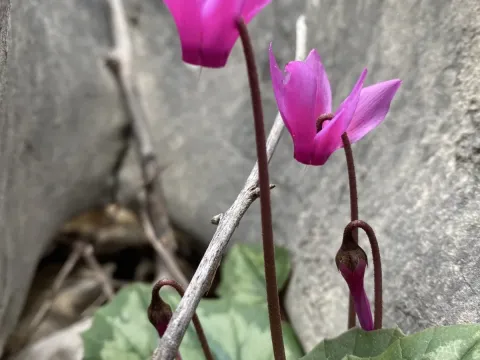
Eastern cyclamen
Cyclamen repandum
Sowing seeds of Cyclamen repandum is best done in autumn, immediately after harvesting. The seeds possess a natural dormancy that often requires stratification in cool, moist conditions to ensure successful germination.
What the section contains
Eastern cyclamen
A well-draining, sterile soil mix is essential for starting seeds. The containers should be kept in a shaded area with temperatures between 15°C and 18°C, ensuring the medium remains consistently moist but not saturated.
Seedlings develop slowly, spending the first season focusing on building a small tuber. Patience is required, as germination can be erratic and may span several weeks or even months under natural conditions.
Transplanting should be handled with extreme care once the seedlings reach a sufficient size. It is critical to ensure the small tuber is not buried too deeply to avoid stem rot during the early stages of growth.
Space the seedlings appropriately to provide adequate ventilation. Proper spacing reduces the risk of damping-off disease, which is a common problem in dense seed trays.
As a member of the Primulaceae family, the Eastern cyclamen thrives in woodland environments with dappled shade. It prefers locations that mimic its native Mediterranean habitat, providing protection from intense afternoon sun.
The soil should be rich in organic matter, loose, and slightly alkaline or neutral. Incorporating leaf mold or well-rotted compost provides the necessary nutrients while maintaining the required drainage structure.
Water management is the most critical aspect of maintenance. During the active growing period, the plant needs regular moisture, but it enters a dormancy phase in summer when the soil must remain dry to prevent tuber rot.
Moderate temperatures are ideal, as the plant does not tolerate extreme heat or frost well. Good air circulation is essential to prevent the accumulation of moisture around the foliage, especially in indoor cultivation.
Fertilization should be applied sparingly, using balanced liquid fertilizers during the growth phase only. Over-fertilization can lead to lush leaf growth at the expense of flowering performance.
Botrytis, or gray mold, is the primary threat to Cyclamen repandum, especially in humid conditions. It manifests as a grayish fungal growth on stems and leaves, requiring immediate removal of affected parts.
Root and tuber rot, often caused by Pythium or Phytophthora species, occurs when the plant is kept in waterlogged soil. Proper drainage is the only effective long-term preventative measure.
Cyclamen mites are common pests that cause distorted, stunted leaf growth and brown edges. These mites are difficult to detect, making preventative monitoring with a magnifying lens highly recommended.
Aphids and thrips can also infest the plants, particularly during the flowering stage. Insecticidal soaps or specialized horticultural oils are generally effective when applied early in the infestation cycle.
Slugs and snails can cause significant damage to young foliage. Implementing physical barriers like crushed shells or copper tape around planting sites helps protect the plants from these mollusks.
Harvesting for the Eastern cyclamen primarily involves the collection of mature seeds for propagation purposes. The process begins after the flowers wither and the peduncles coil down towards the soil surface.
Carefully monitor the seed capsules as they swell and turn a light brown color. The harvest window is short; it is best to collect the capsules just before they split open to prevent loss of seeds.
Clean the harvested seeds from any remaining pulp and allow them to air-dry in a cool, dark room. Properly dried seeds should be stored in breathable containers to maintain their viability.
Vegetative propagation via tuber division is possible for mature, healthy plants. This should only be done during the dormant period, ensuring each division contains at least one active growth bud.
All cut surfaces during tuber division must be dusted with charcoal or a fungicide to prevent secondary infections. Careful handling during this process ensures the continued vigor of the propagated specimens.