
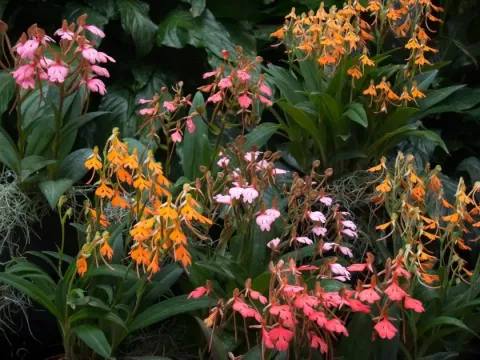
Habenaria
Habenaria
Habenaria is a genus of terrestrial orchids belonging to the Orchidaceae family, known for their unique floral structures that often resemble birds in flight. These plants are native to diverse habitats ranging from tropical rainforests to temperate meadows across the globe.
What the section contains
 Habenaria amalfitana
Habenaria arachnoides
Habenaria arachnoides
Habenaria amalfitana
Habenaria amalfitana
Habenaria arachnoides
Habenaria arachnoides
 Habenaria armatissima
Habenaria armatissima
Habenaria armatissima
 Habenaria carnea
Habenaria carnea
Habenaria carnea
 Habenaria clavata
Habenaria clavata
Habenaria clavata
 Habenaria distans
Habenaria distans
Habenaria distans
 Habenaria eustachya
Habenaria eustachya
Habenaria eustachya
 Habenaria floribunda
Habenaria floribunda
Habenaria floribunda
 Habenaria macroceratitis
Habenaria macroceratitis
Habenaria macroceratitis
 Habenaria medusa
Habenaria medusa
Habenaria medusa
 Habenaria monorrhiza
Habenaria monorrhiza
Habenaria monorrhiza
 Habenaria papyracea
Habenaria papyracea
Habenaria papyracea
 Habenaria quinqueseta
Habenaria quinqueseta
Habenaria quinqueseta
 Habenaria repens
Habenaria repens
Habenaria repens
 Habenaria rhodocheila
Habenaria rhodocheila
Habenaria rhodocheila
 Habenaria sagittifera
Habenaria sagittifera
Habenaria sagittifera
 Habenaria tridactylides
Habenaria tridactylides
Habenaria tridactylides
 Winged Habenaria
Habenaria alata
Winged Habenaria
Habenaria alata
Habenaria
Successful cultivation of Habenaria requires bright, indirect light. Placing them in areas with harsh, direct sunlight can damage their delicate foliage, while insufficient light levels may prevent the plant from producing its characteristic, complex flower spikes.
The substrate must be well-draining yet capable of holding sufficient moisture. A mixture comprising peat moss, perlite, and coarse sand or charcoal is ideal for providing the necessary aeration and preventing the compaction that can suffocate the roots.
During the active growth season, regular watering is essential. However, the medium should be allowed to slightly dry out between waterings. Maintaining a humidity level of at least 60% is highly beneficial, as it replicates the natural environment of these orchids.
Habenaria plants exhibit a clear dormancy period. As autumn approaches, the foliage will yellow and die back. During this time, it is vital to reduce water significantly and keep the tubers in a cool, dry place until new growth signals the start of the next cycle.
Root rot is the most common threat to Habenaria, usually caused by overwatering or poorly aerated growing media. Once the tubers begin to rot, the plant is difficult to save, making proper drainage the primary defense mechanism in orchid care.
Pests such as spider mites and mealybugs can frequently infest these plants, especially in indoor environments with low humidity. These pests suck nutrients from the leaves, causing stunting and potential leaf drop if left untreated for an extended period.
- Monitor leaf undersides for signs of webbing or cottony deposits.
- Use systemic insecticides or insecticidal soaps for immediate control.
- Ensure adequate air circulation to prevent pest breeding grounds.
Fungal leaf spot diseases may appear during periods of high humidity and stagnant air. These typically manifest as dark lesions on the foliage. Removing infected leaves promptly and applying a copper-based fungicide can help manage these outbreaks effectively.
Viral infections are less common but catastrophic if present, often manifesting as mosaic patterns or growth distortions. Since there is no cure, preventing the spread through insect vectors and using sterilized cutting tools during maintenance is the only sound strategy.