
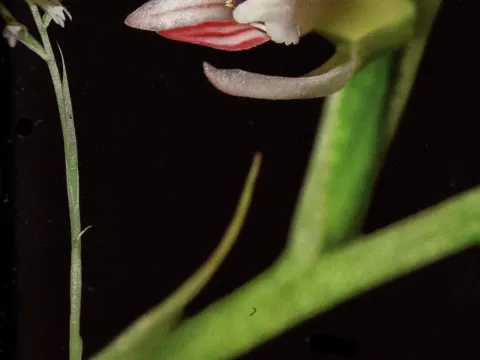
Hapalorchis
Hapalorchis
Hapalorchis is a genus of diminutive epiphytic orchids belonging to the Orchidaceae family. While not classified as an agricultural crop for food production, it is highly regarded within the field of botany and specialized ornamental horticulture for its unique evolutionary adaptations.
What the section contains

Hapalorchis
The native habitat of Hapalorchis spans the tropical regions of Central and South America. These plants are typically found in dense, humid forests, where they inhabit the bark of trees as epiphytes, effectively utilizing the microclimates of the forest canopy.
Botanically, Hapalorchis is defined by its compact size and delicate structure. The plants generally feature a basal rosette of leaves and short inflorescences that carry small, intricate flowers designed for specific pollination vectors prevalent in their native environment.
Optimal growth for these orchids requires strict adherence to environmental parameters, specifically high relative humidity and consistent ambient temperatures. Air movement is a critical factor, as it replicates the natural forest breeze and prevents stagnant moisture around the root zone.
Cultivation protocols differ significantly from standard agricultural crops. The growth medium must be exceptionally well-draining, typically consisting of materials like fir bark or moss, which allow the roots to breathe while maintaining sufficient hydration for the plant's metabolic processes.
The primary threats to Hapalorchis species include fungal infections, which are often exacerbated by poor air circulation and excessive moisture in the root substrate.
Common greenhouse pests such as spider mites, mealybugs, and scale insects can easily infest these small plants, leading to rapid decline in vitality if not addressed promptly.
Root rot is a persistent danger, usually resulting from the breakdown of potting media or over-watering, which compromises the delicate vascular system of the orchid.
Light-related stress is another factor, as excessive solar exposure can cause leaf scorching, rendering the plant vulnerable to opportunistic bacterial pathogens.
Viral pathogens pose a long-term risk to collections, often remaining latent until the plant is stressed, after which they can cause irreversible tissue damage and death.