
Habenaria monorrhiza
Habenaria monorrhiza
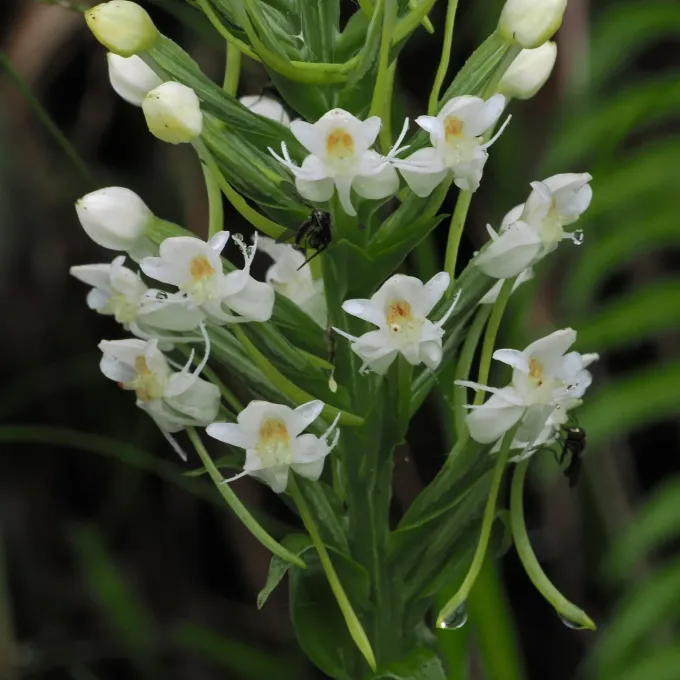
Description
Growing requirements
Habenaria monorrhiza is a terrestrial orchid belonging to the Orchidaceae family. It is a perennial herbaceous plant native to the tropical forests of Central and South America, where it thrives in humid, shaded environments.
Successful cultivation requires a specialized growth medium that mimics the forest floor. A mixture consisting of pine bark, perlite, and organic peat provides the aeration and moisture retention necessary for the healthy development of its root system.
Environmental conditions play a crucial role in plant health. This species requires bright but indirect light and high levels of atmospheric humidity. Temperature should be maintained between 18°C and 25°C to prevent physiological stress.
Botanically, it is known for its tuberous root structure, which serves as an energy storage organ. The plant develops a tall, slender stem bearing racemes of numerous flowers that are highly valued by botanical collectors for their unique morphology.
The primary use of Habenaria monorrhiza is in ornamental horticulture and scientific research. Because it is a specialized orchid, it is often grown in controlled greenhouse settings by enthusiasts and botanical institutions.
Main diseases and pests
Root pathogens, particularly fungal rots, are the most significant threat to this orchid. Overwatering and poor aeration in the pot are the primary causes, leading to rapid degradation of the root system.
Pests such as spider mites, aphids, and mealybugs frequently target the plant, especially in closed environments with low airflow. These pests can rapidly weaken the plant by feeding on its sap.
Management involves a proactive approach: regular cleaning of the foliage, proper spacing to ensure ventilation, and the use of targeted biological controls. Chemical interventions should be used sparingly, ensuring they are compatible with delicate orchid tissues.