
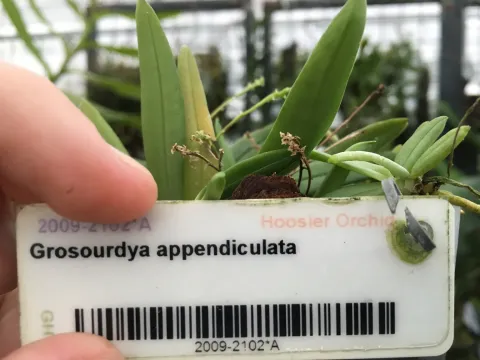
Grosourdya
Grosourdya
Grosourdya is a genus of epiphytic orchids belonging to the Orchidaceae family, native to the tropical regions of Southeast Asia. These plants are characterized by their compact size and unique structural adaptation, often found inhabiting the branches of trees in high-humidity rainforests.
What the section contains

Grosourdya
In cultivation, Grosourdya requires a stable microclimate characterized by high relative humidity, ideally ranging between 60% and 80%. They thrive in environments where temperatures stay between 22 and 28 degrees Celsius, avoiding sudden cold shocks or extreme heat.
Lighting is a critical factor for success; these orchids prefer bright, filtered light. Direct sunlight should be avoided, as it can easily damage the sensitive foliage, leading to dehydration and leaf burn, which can permanently weaken the specimen.
The potting medium must be extremely airy to satisfy the needs of epiphytic roots. A mixture of pine bark, charcoal, and sphagnum moss is the preferred standard, providing structural support while allowing excess water to drain away rapidly.
Watering frequency should be adjusted based on the drying rate of the substrate. It is essential to ensure that the roots do not remain saturated for prolonged periods, as this is the primary cause of decline for this genus in domestic collections.
The most significant threat to Grosourdya is root rot caused by poor ventilation and waterlogged substrate, which creates a breeding ground for opportunistic pathogenic fungi.
Spider mites are common pests that thrive in dry indoor conditions, potentially causing significant damage to the leaf surface and leading to rapid plant deterioration if left untreated.
Mealybugs can also infest these plants, hiding in crevices and at the base of the stems, making them difficult to detect until the infestation becomes severe and requires systematic treatment.
Bacterial soft rot can occur if water sits in the leaf axils for too long, especially during periods of low light and cooler temperatures, leading to tissue decay.
Proactive management, such as maintaining good airflow, inspecting plants weekly for early signs of pests, and using sterile tools for any maintenance, is essential for long-term health.