
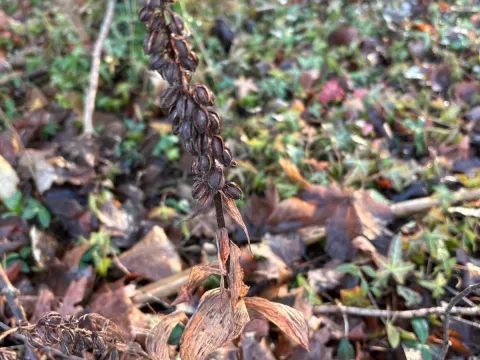
Helleborine
Epipactis Zinn
Helleborine (Epipactis) is a genus of perennial orchids belonging to the Orchidaceae family. These plants are native to temperate regions of Europe, Asia, and North America, typically inhabiting forest floors, damp meadows, and calcareous wetlands.
What the section contains

Helleborine
Botanically, they are recognized by their leafy stems and terminal racemes of small, often complex flowers. Their root system consists of short rhizomes that rely heavily on mycorrhizal associations with specific soil fungi to absorb nutrients efficiently.
Growing requirements for Epipactis include a cool, shaded environment with consistent soil moisture and a neutral to slightly alkaline pH. They thrive in rich, loamy soils that mimic the structure of woodland leaf litter.
While not a traditional agricultural crop, Epipactis holds value in horticultural circles as a sophisticated ornamental plant. Its cultivation requires patience, as the plants are slow to establish and sensitive to environmental changes.
The primary use of helleborine is in landscape architecture, specifically for creating naturalistic shade gardens. They are highly prized by collectors for their unique structure and the delicate beauty of their flowering spikes.
The main threats to helleborine populations are habitat loss, wetland drainage, and urban development. In a garden setting, they are sensitive to excessive mineral fertilizers, which can disrupt the delicate soil fungal balance required for their survival.
Slugs and snails are the most common garden pests, as they feed voraciously on the tender foliage. Gardeners often use non-toxic barriers or hand-picking to protect the orchids from these mollusks without damaging the ecosystem.
Root pathogens and various fungal wilts represent significant threats, especially if the soil drainage is inadequate. Maintaining a well-aerated soil profile is the most effective preventative measure against these infections.
Insect pests like aphids or spider mites are occasional issues, particularly in hot and dry weather. If an outbreak occurs, mild insecticidal soaps or biological control agents are preferred over harsh synthetic pesticides to protect the plant.
Disturbance of the soil structure or root system is another significant risk factor. Because helleborines are highly adapted to stable conditions, they do not recover well from frequent division or relocation, making long-term site planning essential.