
Elder-flowered orchid
Dactylorhiza sambucina
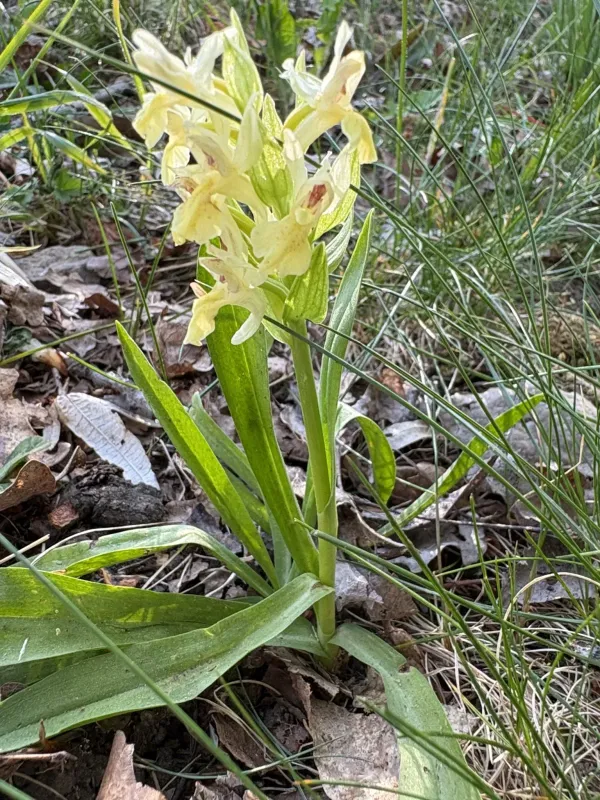
Description
Growing requirements
The elder-flowered orchid (Dactylorhiza sambucina) is a perennial member of the Orchidaceae family, native to European mountain meadows and pastures. It is known for its distinct dimorphic flower coloration, appearing in both yellow and red-purple variations.
Botanically, the plant develops from a pair of palmate tubers, which serve as storage organs. It typically thrives in temperate climates, requiring exposure to sunlight with enough soil moisture to sustain the plant during the growing season.
Soil requirements demand a well-draining structure with a neutral to slightly acidic pH. The plant does not tolerate waterlogging, which often leads to immediate tuber rot; therefore, sandy or gritty substrates are preferred for controlled environments.
A critical agronomic factor is the presence of symbiotic mycorrhizal fungi. Without this biological association, the orchid cannot adequately absorb nutrients, making traditional fertilization ineffective and often harmful.
While not a major commercial crop, the species serves as a vital component in biodiversity conservation and specialized botanical horticulture, requiring specific environmental stability to flourish.
Main diseases and pests
Fungal infections, particularly root rot, are the primary threat to Dactylorhiza sambucina when drainage is inadequate or atmospheric humidity remains high for prolonged periods.
Pests such as aphids can compromise the vitality of the inflorescences by feeding on sap, leading to stunted growth and reduced seed set.
Gastropods, including slugs and snails, pose a significant risk to the plant during its emergence in early spring, often consuming entire vegetative shoots.
The loss of specific mycorrhizal fungi due to soil chemistry changes is a major threat that can lead to local extinction within a cultivated patch.
Environmental stress, such as late spring frosts, can damage the developing floral stalks, thereby reducing the reproductive success of the plant population for that year.