
Earina autumnalis
Earina autumnalis
Description
Growing requirements
Earina autumnalis is an epiphytic orchid species belonging to the Orchidaceae family. Native exclusively to New Zealand, this species is typically found growing on trees and rock faces, where it thrives in humid and temperate conditions.
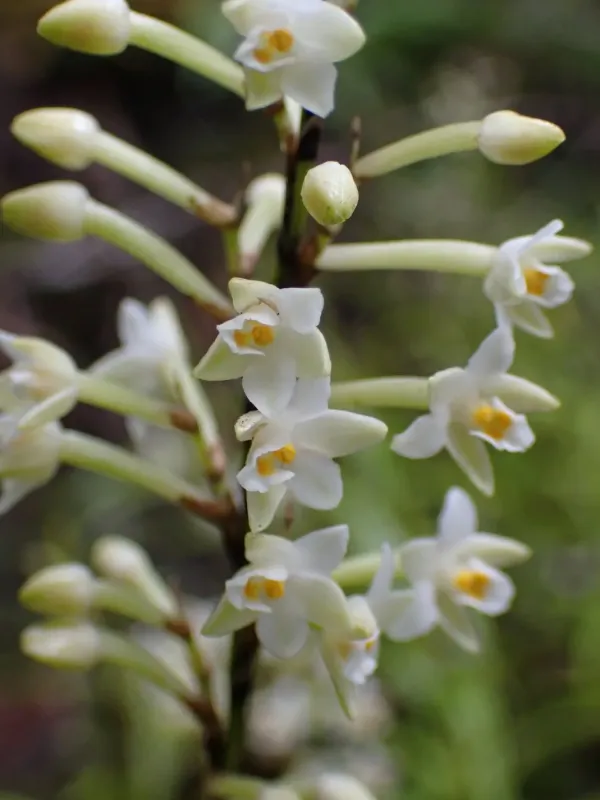
The plant exhibits specific botanical features, such as slender stems and small, fragrant, creamy-white flowers. In a controlled cultivation environment, these orchids must be provided with high-quality bark-based substrates to ensure adequate drainage and aeration for their roots.
Environmental requirements are strict for this species. It prefers a humid atmosphere with a relative humidity level maintained between 60% and 75%. Constant air circulation is essential to mimic its natural montane or forest habitat and to prevent stagnant moisture.
Regarding light, Earina autumnalis requires bright, filtered light. Exposure to direct afternoon sunlight should be avoided to prevent leaf dehydration and scorching. A stable temperature range, avoiding extremes, is recommended for healthy vegetative growth.
Cultivation of this plant is primarily for botanical collections and ornamental purposes. Its unique blooming period, which occurs in autumn, makes it a prized specimen for growers who appreciate aromatic orchids and native New Zealand flora.
Main diseases and pests
The most common threats to Earina autumnalis are related to improper watering practices. Over-saturation of the substrate often leads to root rot, which is a lethal condition for many epiphytic orchids if not addressed promptly.
Pest infestations such as mealybugs and spider mites are frequent issues, especially in low-humidity environments. These pests can rapidly weaken the plant by feeding on its sap, leading to stunted growth or total plant failure if left untreated.
Fungal diseases are another significant risk, particularly those that manifest as leaf spotting or stem rot. Maintaining a clean growing area and promptly removing decaying organic matter are vital management practices.
Chemical control must be applied with caution, as orchid tissues can be highly sensitive to concentrated pesticides. Integrated Pest Management (IPM) strategies, including physical removal of pests, are often preferred for this delicate species.
Ensuring that the growing environment has adequate ventilation is the best preventative measure against most pathogens. Stagnant, humid air creates a breeding ground for many types of fungal infections that target Earina species.