
Dryadella simula
Dryadella simula
Description
Growing requirements
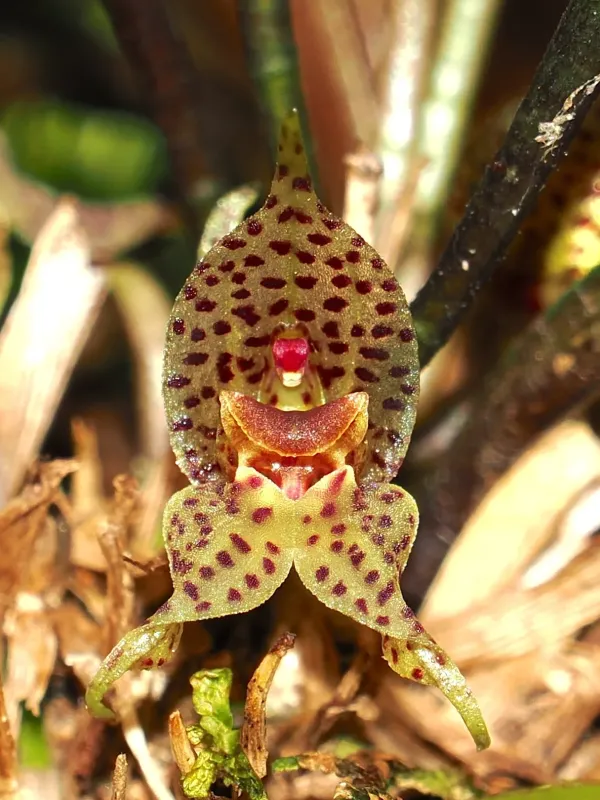
Dryadella simula is a fascinating miniature epiphytic orchid belonging to the Orchidaceae family. Native to the cool, mist-covered mountain forests of South America, this species is highly valued by enthusiasts for its unique, cryptic flower structure.
The plant features a compact, sympodial growth habit with small, leathery leaves arranged in tight fans. Its root system is delicate and highly adapted to absorbing moisture and nutrients from the humid air and surface of its host tree trunks.
To cultivate this species successfully, it is essential to replicate its natural environment by maintaining high humidity levels, ideally between 70% and 80%. Good air circulation is critical to prevent moisture from pooling in the delicate foliage, which can lead to decay.
Cultivation on mounts or in small baskets with a minimal amount of sphagnum moss is recommended to ensure rapid root drying after watering. The plant requires bright, filtered light and should never be exposed to direct, scorching sun, which can damage its tissues.
Temperature management is key for Dryadella simula, as it prefers cool to intermediate conditions. Stable environmental conditions help the plant bloom consistently, producing small, intriguing flowers that often resemble tiny, intricate works of art.
Main diseases and pests
The most common pests affecting this orchid are spider mites and mealybugs. These insects can rapidly multiply if the environment becomes too dry or if air movement is insufficient, necessitating regular inspections.
Bacterial and fungal rot are the primary health risks, often caused by stagnant water trapped in the plant's leaf axils during cooler periods. Providing excellent drainage and ensuring the plant dries out appropriately between waterings is the best defense against these pathogens.