
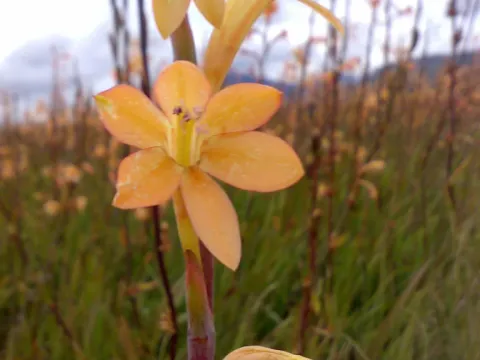
Watsonia
Watsonia
Watsonia is propagated primarily through corms, which are planted in open ground in the spring once the soil temperature consistently exceeds 10–12°C. This timing is critical to ensure rapid root establishment.
What the section contains


Watsonia
The corms should be planted at a depth of 8 to 12 centimeters, depending on their size and the soil's texture. Maintaining a spacing of 15 to 20 centimeters between plants is recommended to facilitate optimal airflow and prevent overcrowding.
Propagation via seeds is feasible but requires sowing in a controlled environment, such as a greenhouse, during late winter. Seeds often require stratification to ensure consistent and uniform germination rates.
Dividing established corm clumps is an efficient practice performed during the dormant season. This helps rejuvenate the plantings and ensures high-quality planting material for future cycles.
Care must be taken to avoid planting in waterlogged or excessively cold soil, as this significantly increases the risk of rot. Properly preparing the seedbed with organic matter can improve soil drainage and thermal retention.
Watsonia belongs to the Iridaceae family and is native to Southern Africa. As a crop, it thrives in environments that provide full sun exposure, which is essential for developing strong, vibrant flower spikes.
The crop requires well-drained, loose soil with a neutral to slightly acidic pH. When grown in heavy clay soils, incorporating coarse sand or grit is necessary to improve drainage and prevent crown rot.
Consistent moisture is required during the active growing phase, particularly before and during flowering. However, after flowering ends and leaves begin to yellow, irrigation should be significantly reduced.
The plant is not frost-hardy and requires protection in regions with freezing winters. In temperate climates, lifting the corms for indoor storage during the winter is a standard agricultural practice.
Providing adequate wind protection is also important, as the tall flower stalks are susceptible to lodging or snapping under high wind pressure, which can damage the aesthetic and commercial quality of the blooms.
Fungal diseases, specifically those causing basal rot and Fusarium wilt, are common threats, especially when soil moisture is poorly managed. Using high-quality fungicides on corms before storage is a primary prevention method.
Pests such as thrips and spider mites frequently attack the foliage, causing stunting and discoloration. Regular field inspections are essential for early detection and the timely application of control measures.
Aphids can also act as vectors for viral diseases. Since viral infections in Watsonia are incurable, removing and destroying symptomatic plants is the only effective way to protect the remaining crop.
Root-knot nematodes can damage the root system, leading to poor vigor. Implementing a strict crop rotation schedule helps reduce the population of these soil-borne pests over time.
The use of systemic insecticides can be effective against sucking insects, but application must be carefully timed to avoid harming beneficial pollinators and natural predators present in the field.
The harvest of corms is initiated once the foliage has naturally withered and turned yellow, signaling that the plant has entered its dormant phase and the corms are fully matured.
After carefully digging up the corms, they should be cleaned of soil and debris without stripping the protective outer tunics. Damaged corms should be culled to prevent the spread of decay during the curing process.
A curing period of 10 to 14 days in a dry, well-ventilated location out of direct sunlight is necessary to toughen the outer skins and ensure long-term storability.
Storage should take place in a cool, dark environment with temperatures maintained between 5°C and 8°C. Using a medium like dry peat or sand helps regulate humidity levels and prevents the corms from dehydrating.
Periodic inspections throughout the storage duration allow for the removal of any diseased or molding corms, ensuring the health and viability of the stock for the following planting season.