
Watsonia borbonica
Watsonia borbonica
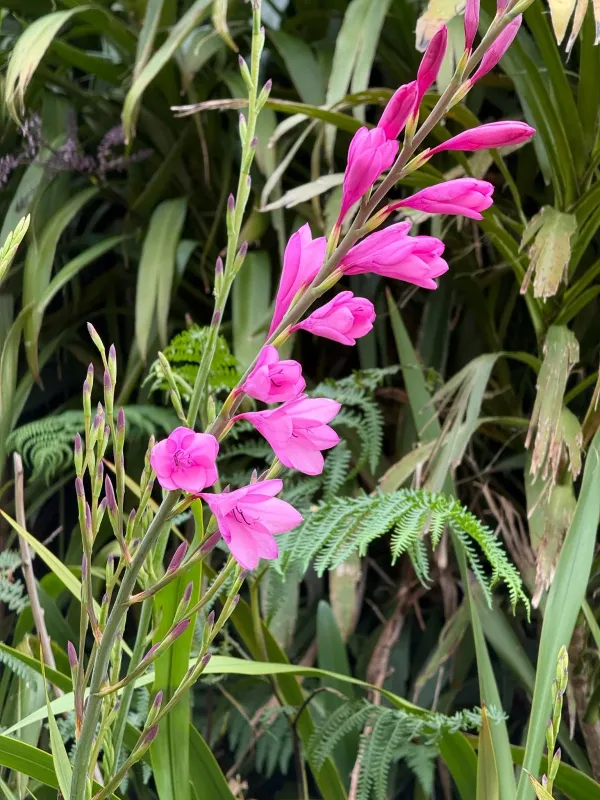
Description
Sowing dates
Watsonia borbonica, a member of the Iridaceae family, is typically propagated through corm division or seeds. Planting in open ground takes place in the spring, once the soil has warmed to at least 12–15 degrees Celsius.
When propagating from seeds, sow them in greenhouses or cold frames in late winter or early spring. Seeds should be sown shallowly, about 0.5–1 centimeter deep, in a loose and well-draining sowing mix.
Once seedlings have developed their first set of true leaves, they should be pricked out into individual containers. This allows the roots to expand without competition, ensuring vigorous growth before transplanting.
Transplanting into the garden is done only after the danger of frost has passed. Watsonia is sensitive to cold, so it requires a stable, warm environment to successfully establish its root system.
A spacing of 20–30 centimeters between plants is recommended. Proper spacing is essential to ensure adequate air circulation, which significantly reduces the risk of fungal diseases during the growing season.
Growing requirements
Watsonia borbonica is native to the Cape region of South Africa, making it a plant that thrives in Mediterranean climates with full sun exposure. It requires bright, direct light throughout the day.
The ideal soil for Watsonia is fertile, well-draining, and sandy or loamy. Stagnant water is highly detrimental, often causing the corms to rot quickly if the drainage is not sufficient.
Regular but moderate watering is necessary, especially during the peak growth and flowering phases. It is crucial to maintain consistent soil moisture without saturating the roots to prevent rot.
The plant needs protection from strong winds due to its tall flower spikes, which can reach heights of up to 1.5 meters. Staking or planting in wind-sheltered areas is recommended for better support.
In regions with freezing winters, the corms must be lifted in autumn. They should be stored in a cool, dry place with temperatures between 5 and 10 degrees Celsius until the next planting season.
Main diseases and pests
Thrips and spider mites are the most common pests for Watsonia, especially in dry environments. Regular scouting and early intervention with systemic insecticides can effectively manage these populations.
Fungal diseases, including root rot and Fusarium, are frequent threats when soil moisture is poorly managed. Pre-planting treatment of corms with fungicides is a standard preventive practice.
Slugs and snails can cause significant damage to young shoots in early spring. Installing barriers or using organic baits is often necessary to protect the plant during its vulnerable early growth stage.
Aphids can act as vectors for various plant viruses, necessitating a consistent pest control program. Removing any plants that show signs of viral infection is vital for maintaining the health of the collection.
Storage rot is a common issue for dormant corms if they are not dried properly. Ensuring excellent ventilation during storage and discarding damaged corms before winter protects the rest of the batch.
Harvesting
Flowers are harvested when the lower buds have opened and the upper ones show color. Using sharp, sterile shears for cutting ensures the longevity of the blooms in a vase.
For corm harvest, wait until the foliage has turned yellow and withered naturally after flowering. This allows the plant to transfer nutrients back into the corm for the next cycle.
After lifting, clean the corms of dirt and old roots, then air-dry them in a shaded, well-ventilated area for several days. This process helps heal wounds and prevents rotting during dormancy.
Store cleaned corms in mesh bags or trays with wood shavings to maintain airflow. Labeling the batches ensures you track varieties and sizes for the next season's planning.
Regular inspection of stored corms throughout the winter helps identify any signs of decay or drying out. Prompt removal of spoiled corms is essential to preserve the overall viability of the stock.