
Watsonia fourcadei
Watsonia fourcadei
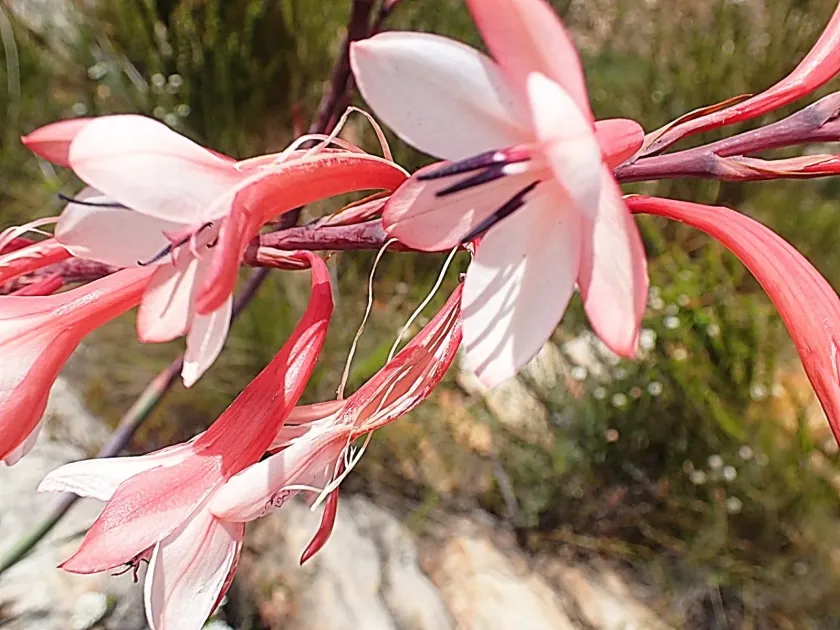
Description
Growing requirements
Watsonia fourcadei is a perennial cormous plant belonging to the Iridaceae family. Native to South Africa, it is known for its elegant, tall spikes of flowers that create a striking aesthetic in landscaping.
This species requires full sun exposure to thrive and develop robust flower stalks. It is not cold-hardy, meaning it is typically grown as a summer-flowering bulb in temperate regions where it must be lifted before the first frost.
The ideal growing medium for Watsonia is a well-draining, sandy-loam soil. Proper drainage is the most critical factor, as stagnant moisture around the corms significantly increases the risk of fungal decay.
Consistent moisture is needed during the spring growth phase, but the plant requires a dry dormancy period after flowering. Watering should be gradually reduced once the leaves begin to yellow in late summer.
Regular fertilization with a balanced NPK fertilizer during the vegetative stage helps sustain vigorous growth. High potassium levels are specifically beneficial for promoting better corm development and future bloom quality.
Main diseases and pests
Fungal pathogens, particularly those causing corm rot and basal rot, represent the most significant threat to Watsonia fourcadei. These infections are often triggered by overwatering or poor soil ventilation.
Spider mites are common insect pests that thrive during dry, warm periods. They cause yellowing and necrosis of the leaves, which can reduce the plant's ability to store energy for the following season.
Chemical control involving fungicides is recommended if signs of root or corm decay are observed. Always ensure the planting area is properly aerated to inhibit the spread of fungal spores.
Integrated Pest Management (IPM) practices, such as rotating crops and maintaining clean tools, are essential to prevent the buildup of soil-borne diseases over multiple seasons.
If an infestation occurs, targeted application of appropriate insecticides is necessary to manage pest populations before they cause irreparable damage to the foliage and flower production.