
Watsonia marginata
Watsonia marginata
Description
Growing requirements
Watsonia marginata is a perennial cormous plant belonging to the Iridaceae family. Native to the Cape region of South Africa, it has evolved in Mediterranean-type climates, characterized by wet winters and dry, warm summers, which define its growth cycle.
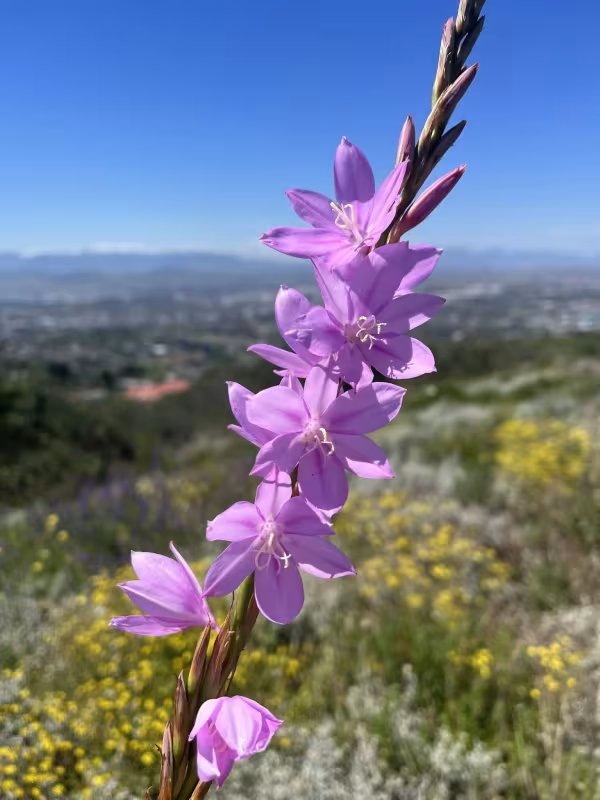
The plant features distinct sword-shaped leaves and tall, graceful spikes of tubular flowers. It thrives in locations receiving full sun, which is essential for triggering the development of flowering stems and ensuring the long-term vigor of the corms.
Soil requirements focus on excellent drainage and aeration. A sandy or loamy soil enriched with organic matter provides the ideal environment. If the soil is too heavy, the risk of corm rot increases significantly, making the use of raised beds or specialized substrates necessary.
Water management is the most critical aspect of Watsonia agronomy. During the growing season, moisture must be constant but not excessive. Once the foliage begins to yellow and die back, irrigation should be withheld entirely to allow the plant to enter its natural dormancy.
Propagation is typically achieved through offsets or daughter corms produced at the base of the parent. These are separated during the dormant season, dried for several days to allow wounds to callus, and replanted in the following growing cycle.
Main diseases and pests
The primary threats to Watsonia marginata are soil-borne pathogens, particularly fungi causing basal rot and corm blight. Sanitation of the growing area and the use of healthy, disease-free planting material are the standard preventive measures.
Insects such as thrips and aphids may colonize the foliage during the flowering stage, potentially weakening the plant and reducing the accumulation of nutrients in the corms. Integrated pest management strategies are recommended to maintain plant health throughout the season.