
Watsonia hybrids
Watsonia hybrids
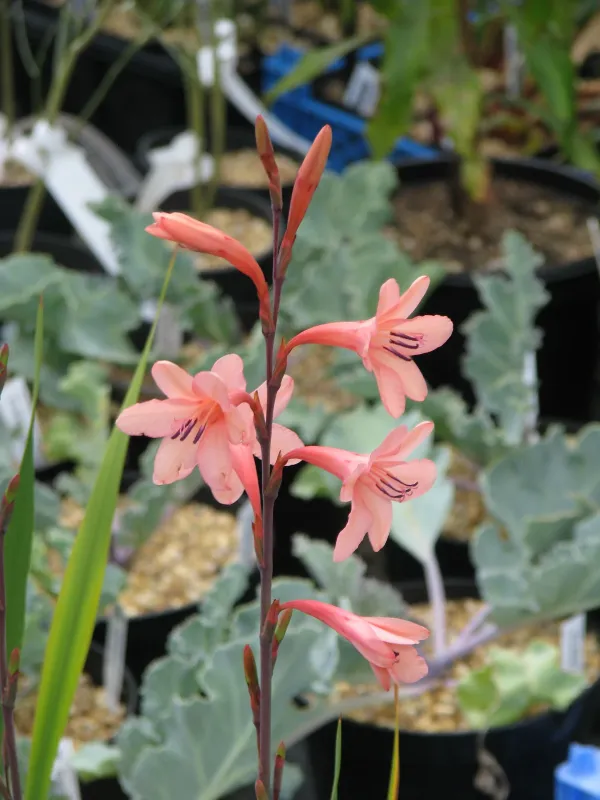
Description
Sowing dates
Watsonia hybrids belong to the Iridaceae family and are popular perennial bulbous plants valued for their tall spikes of funnel-shaped flowers. Planting should occur in the spring once the danger of frost has passed and soil temperatures have consistently risen above 10°C.
The bulbs should be planted at a depth of 8 to 12 centimeters, depending on the bulb size, into well-prepared soil. Spacing is crucial; keep plants about 20 centimeters apart to prevent overcrowding and ensure adequate airflow for the developing foliage.
In a commercial setting, staggered planting is often utilized to ensure a continuous supply of cut flowers. By planting batches of bulbs at 10-day intervals, growers can extend the harvesting period significantly throughout the growing season.
Before planting, it is advisable to treat bulbs with a broad-spectrum fungicide to protect against soil-borne pathogens. Ensuring the bulbs are firm and free from signs of decay is the first essential step in successful cultivation.
If planting in containers or areas with heavier soils, adding a layer of coarse sand at the bottom of the planting hole is highly recommended. This improves local drainage and prevents the basal plate of the bulb from sitting in stagnant water.
Growing requirements
These plants thrive in full sun and require at least 6 to 8 hours of direct light daily to produce strong, non-flopping flower spikes. Locations with partial shade may result in weak, elongated stems that require artificial support.
The soil must be fertile, well-draining, and rich in organic matter. Watsonia hybrids perform best in light, sandy-loam soils with a slightly acidic to neutral pH ranging from 6.0 to 7.0, which promotes optimal nutrient uptake.
Adequate water is essential during the active growing phase, particularly as flower spikes begin to develop. However, growers must avoid waterlogging the site, as this is the primary cause of root and bulb rot in this species.
Wind protection is a vital consideration because the tall flower stalks are prone to damage in exposed areas. If wind is a persistent factor in your region, consider planting in sheltered beds or using sturdy staking systems early in the season.
Soil nutrient management should involve a balanced NPK fertilizer applied during the early growth stage. Once flowering ends, the fertilizer should be reduced to encourage the plant to direct its energy back into the bulb for the next season.
Main diseases and pests
The most common disease threats include Fusarium and Botrytis, particularly in damp and poorly ventilated conditions. Prevention is centered on maintaining dry storage for bulbs and ensuring good site drainage during the growing season.
Thrips are the most notorious pests for Watsonia, as they feed on the developing buds and leaves, leaving unsightly silver streaks and causing stunted flower development. Systemic insecticides are recommended for effective control.
Aphids may occasionally colonize the soft, succulent leaves and buds, acting as vectors for viral infections. Early identification and manual removal or insecticidal soap applications usually suffice to keep populations in check.
Root nematodes can cause poor plant vigor and lackluster flowering. The best defense is implementing a strict crop rotation schedule and ensuring that only certified, healthy bulbs are sourced from reputable suppliers.
Regular monitoring of the planting site is essential for identifying pest pressure early. Any plant showing signs of viral mottling or persistent wilting should be removed and destroyed to prevent the spread of diseases to neighboring crops.
Harvesting
Harvesting for bulb storage takes place in the autumn, once the foliage has naturally turned yellow and begun to die back. This signals that the bulb has finished its current life cycle and is ready for dormancy.
After extraction, the bulbs should be cleaned of soil and debris and cured in a shaded, well-ventilated area for approximately two weeks. This curing process helps toughen the outer scales and reduces moisture loss during winter storage.
For commercial cut flower production, stalks should be cut when the bottom buds are just starting to show color. Stems harvested at this stage have a longer vase life and are less prone to damage during transport and handling.
Storage should be conducted at cool, stable temperatures of 8–10°C in dry conditions. Using peat moss or wood shavings as a packing medium helps maintain the integrity of the bulbs and prevents them from dehydrating during the winter months.
Bulbs should be graded by size and separated from offsets during the post-harvest period. This systematic organization ensures that smaller bulblets are cared for appropriately until they reach flowering size in subsequent seasons.