
Warley iris
Iris warleyensis
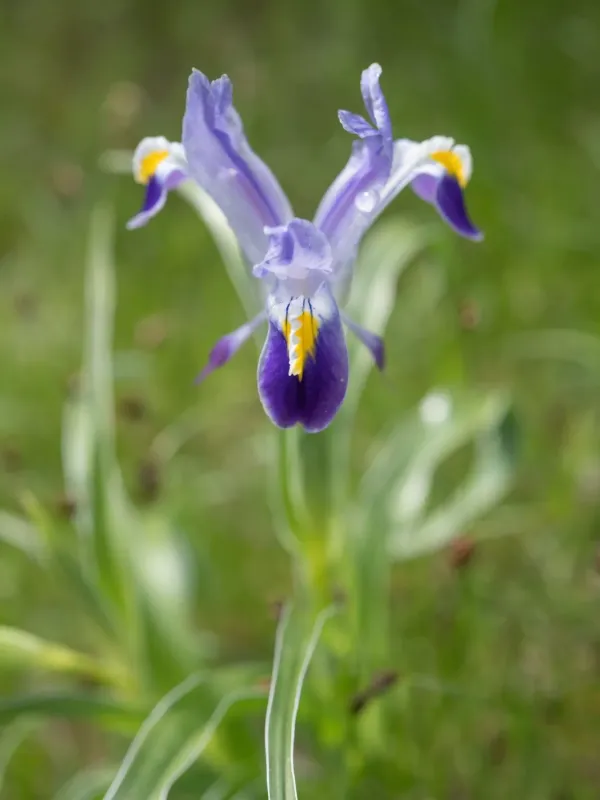
Description
Growing requirements
The Warley iris (Iris warleyensis) belongs to the Iridaceae family and is a member of the Juno subgenus. This perennial ephemeral plant is native to the mountainous regions of Central Asia, specifically the Zarafshan Range.
The species prefers well-drained, dry, and rocky soils. A crucial cultivation requirement is ensuring a dry dormant period during the summer months, which is essential to prevent the fleshy bulbs from rotting in the ground.
In temperate climates, it is recommended to plant this species on raised beds or alpine rock gardens. The plant requires maximum sun exposure and protection from excessive moisture during the autumn and winter seasons.
Botanically, the species is distinguished by fleshy roots radiating from the base of the bulb and characteristic sickle-shaped leaves. The flowers feature a complex structure with distinct markings on the falls, adding significant ornamental value.
The agricultural and ornamental use of this species is primarily focused on specialized collector gardens and breeding programs. Due to its rarity and restricted habitat, it is a highly prized plant among enthusiasts of alpine and bulbous flora.
Main diseases and pests
The primary threat to the Warley iris is fungal root rot caused by poor soil drainage. Fusarium wilt and various types of bulb rot can quickly destroy plantings if moisture levels are not strictly managed.
Among the pests, bulb mites and the turnip moth larvae pose the greatest danger. These organisms feed on the bulb base, weakening the plant's defense system and often leading to total loss.
To prevent losses, it is advised to treat bulbs with fungicides before planting and to maintain a precise watering schedule during the growing season. The use of fresh organic fertilizer should be strictly avoided.
Under conditions of high humidity, plants become highly susceptible to soft rot (bacterial infection). If any softening of the bulb tissue is detected, the affected specimen should be immediately removed and discarded.
Given the species' vulnerability to pathogens, regular inspection of the plants is essential. Early detection of mechanical damage to leaves or bulbs is critical, as these wounds provide entry points for secondary infections.