
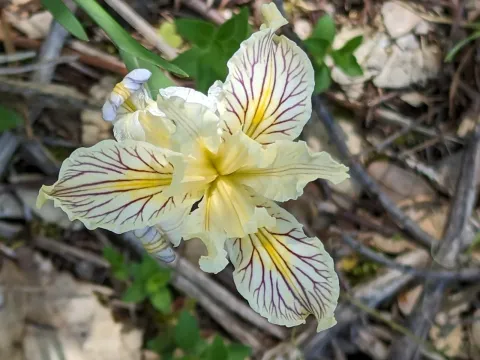
Iris bracteata
Iris bracteata
Iris bracteata, commonly known as the Siskiyou iris, is a perennial herbaceous plant belonging to the Iridaceae family. Native to the southwestern regions of Oregon and northwestern parts of California, it thrives in open woodlands and sunny slopes.
What the section contains
Iris bracteata
Botanically, it is characterized by narrow, leathery leaves that persist throughout the winter. The flowers are notably elegant, typically displaying creamy, yellow, or pale orange hues, uniquely accented with darker violet or brownish veins that provide high aesthetic appeal.
The plant requires well-draining soils with a slightly acidic profile. It is highly adapted to gravelly or rocky substrates, provided they offer excellent aeration. A key agronomical requirement is the avoidance of standing water, as the rhizomes are extremely susceptible to rot.
Regarding climate, the Siskiyou iris prefers open, sunny positions to ensure vigorous flowering. However, in regions prone to intense heat, partial shade during the afternoon hours is recommended to protect the foliage from scorching and to maintain soil moisture levels.
In ornamental horticulture, Iris bracteata is highly valued for naturalistic garden designs, rockeries, and alpine beds. Its moderate stature makes it an ideal candidate for small-scale landscape projects where unique native species are emphasized.
The most significant threat to the health of Iris bracteata is fungal disease, particularly when grown in heavy or poorly drained soils. Root rot is a persistent danger and can lead to the rapid decline of individual clumps if the soil remains saturated for prolonged periods.
Leaf spot infections are common during cool, humid spring months. These pathogens can compromise the plant's photosynthesis and overall vigor. Good garden hygiene, such as removing old, dead foliage, is essential to minimize the inoculum levels in the garden environment.
Insects like slugs and snails pose a constant risk to the succulent young shoots and developing flower buds, especially in damp microclimates. Mechanical barriers or eco-friendly baits are often used in professional nursery settings to mitigate this damage.
Pest management should prioritize cultural practices, including strategic spacing to improve airflow around the plants. This reduces the humidity levels around the crown, making the environment less favorable for both fungal spores and soft-bodied insect pests.
Should severe infestations occur, integrated pest management (IPM) strategies should be employed. This involves identifying the pest specifically and applying targeted treatments rather than broad-spectrum chemicals, which can harm beneficial insects in the garden.