
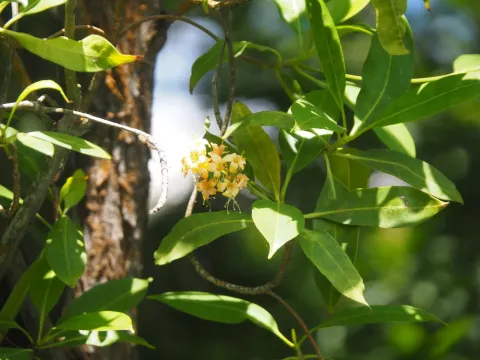
Cyrtophyllum
Cyrtophyllum
Cyrtophyllum, often classified within the Fagraea genus, is a tropical tree species belonging to the Gentianaceae family. It is native to the rainforests of Southeast Asia and is highly valued for its robust wood.
What the section contains


Cyrtophyllum
The plant thrives in a tropical climate characterized by consistently high temperatures, ideally ranging between 25°C and 32°C. It is strictly intolerant to frost and requires a stable, warm thermal environment for healthy development.
Soil requirements involve well-drained, nutrient-rich substrates. The tree prefers deep, loamy soils that can maintain moisture while preventing waterlogging, which is critical for root health in tropical conditions.
Light exposure is a significant factor in the growth cycle of Cyrtophyllum. While it exhibits shade tolerance in its juvenile stage as part of the forest understory, it requires significant solar radiation as it matures to achieve optimal timber growth.
Agronomic management requires high atmospheric humidity and consistent water availability. Without these conditions, the physiological processes slow down significantly, leading to stunted growth patterns.
The primary economic output of Cyrtophyllum is its high-density timber, commonly referred to as Tembusu. This wood is renowned for its exceptional durability, resistance to rot, and immunity to termite infestations.
Its industrial application is focused on heavy-duty construction, including bridge building, power poles, and durable furniture exposed to harsh environmental factors, making it a valuable forestry asset.
In addition to its timber potential, the species serves a pharmacological role. Research into the secondary metabolites of the bark and leaves has highlighted the presence of alkaloids with medicinal properties.
The plant is also utilized in urban forestry and landscape architecture. Its ability to produce fragrant, long-lasting flowers makes it a preferred choice for large-scale landscaping projects in tropical cities.
Sustainable harvest strategies are essential to maximize yield. Proper forest management and selective logging ensure the continuity of the resource while maintaining the ecological balance of the plantation.