
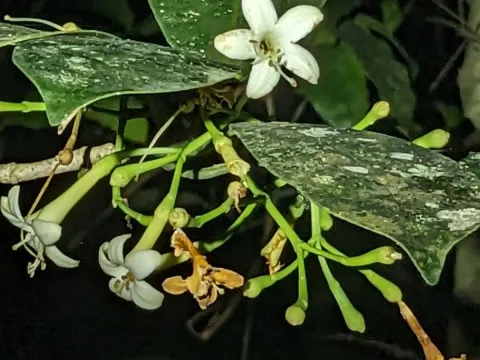
Fagraea
Fagraea Thunb.
Fagraea is a genus of evergreen trees and shrubs belonging to the Gentianaceae family. These plants are native to the tropical regions of Southeast Asia, Australia, and the Pacific Islands.
What the section contains

Fagraea
The plant thrives in humid tropical conditions. It requires high air humidity and a stable temperature range of 22 to 28 degrees Celsius, as it is highly sensitive to cold and frost.
Soil requirements include a rich, well-draining medium that mimics the forest floor. Excellent drainage is critical, as stagnant water is detrimental to the plant's health and root system.
Regarding lighting, Fagraea prefers bright, indirect sunlight. Exposure to harsh, direct midday sun can damage the foliage and cause stunted growth in young specimens.
Cultural practices involve maintaining a consistent moisture level. Given its potential epiphytic nature, the plant benefits from substrates that allow for aeration while retaining sufficient water for steady growth.
Fagraea is primarily valued in horticulture for its ornamental beauty. Its large, fragrant flowers make it a highly desirable species for tropical landscapes and botanical gardens.
The timber of several Fagraea species is known for its remarkable durability and resistance to decay, making it a sought-after material for local construction and traditional carving.
In various Pacific cultures, the flowers of Fagraea berteriana are culturally significant. They are frequently used to create traditional garlands and are valued for their intense scent in local perfumery.
Seed harvesting is conducted when the berries are fully mature. Due to the short viability period of the seeds, they should be sown in a nursery bed immediately after extraction from the fruit.
Pruning is essential for maintaining the desired shape and size of the tree. Selective trimming encourages denser growth and more vigorous flower production throughout the blooming season.
Root rot is the most common and dangerous condition for Fagraea, typically caused by overwatering or soil compaction that hinders proper drainage and aeration.
Pests such as mealybugs and scale insects may infest the foliage. These pests thrive in stagnant air conditions, emphasizing the importance of good ventilation around the plant.
Fungal leaf spots can occur during periods of high humidity and poor airflow. Managing plant spacing and ensuring the leaves can dry off are effective preventive strategies.
Bacterial pathogens can cause tissue necrosis. If discovered, infected branches must be pruned back to healthy wood, and tools should be sterilized to prevent further contamination.
Integrated pest management, focusing on maintaining strong plant vigor and natural enemies, is the preferred approach for keeping Fagraea specimens healthy in their natural environment.